
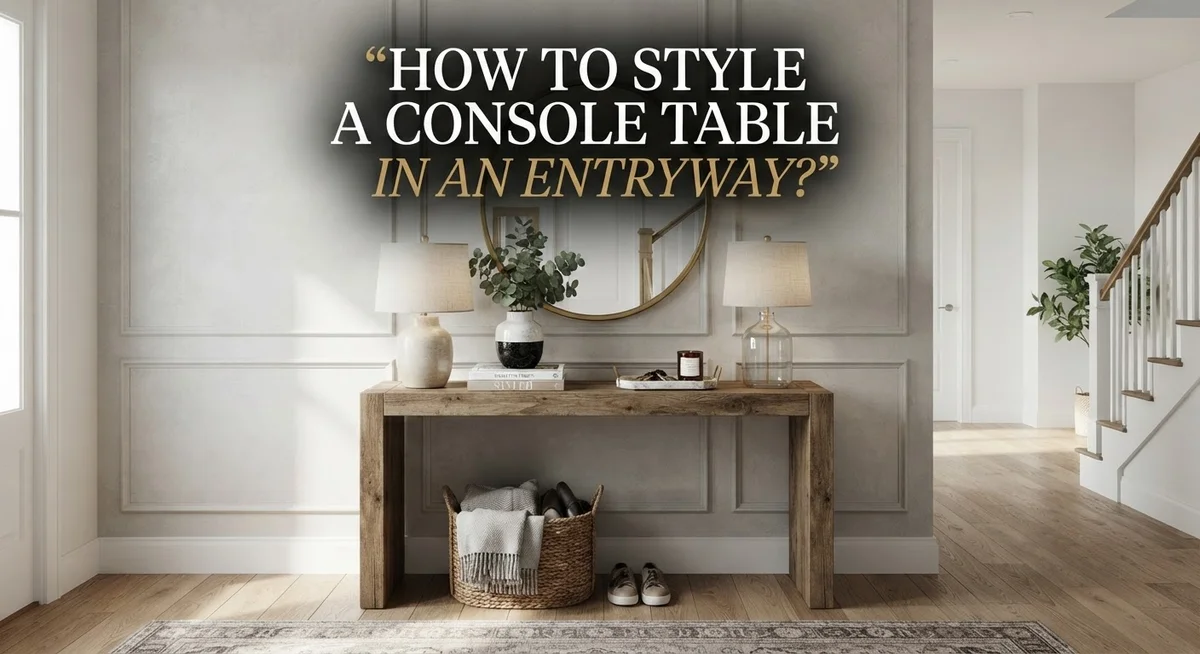
How to Style a Console Table in an Entryway?
Your entryway says a lot about your home. It’s the very first space guests see, and a console table can make that space feel warm and welcoming.
But an empty table or a cluttered one can send the wrong message. You want a spot that feels organized, not overwhelming.
Styling a console table is easier than you think. With a few simple tricks, you can turn this small space into a big design statement.
This guide will show you how to choose the right table for your entryway. We will cover how to build a focal point above it using mirrors or art.
You will also learn how to layer objects with different heights and textures. This creates visual interest without looking messy.
We will point out common mistakes, like overcrowding the surface. You will also see how to use light and color to make your entryway feel bigger and brighter.
By the end, you will know exactly how to make your entryway table both beautiful and functional. Let’s get started.
In a Nutshell
Here is your quick recap for styling a console table with ease.
-
Pick a slim table. A narrow, open style keeps your entryway easy to walk through. It also fits well in tight spaces.
-
Add a focal point. Hang a mirror or artwork above the table. This draws the eye up and makes the space feel bigger.
-
Play with height. Mix tall and short items on the table. This creates visual interest without looking messy.
-
Bring in texture. Add plants, trays, or baskets. These small touches make the table feel warm and lived in.
-
Match your style. Choose modern clean lines or farmhouse rustic wood. Let the table match your home’s overall look.
-
Avoid overcrowding. Keep the surface simple. Too many items can make the space feel cluttered instead of styled.
Follow these simple steps, and your entryway will feel welcoming from the moment you walk in.
Choosing the Right Console Table for Your Entryway
Your entryway console table needs to fit both your space and your lifestyle. Start by measuring your entryway width and depth. A console table should take up about one third of your wall space, leaving room to move freely.
Slim profiles work best in tight entryways. Look for tables with open legs or a floating design. These styles don’t block sightlines and make small spaces feel bigger. If your entryway is narrow, a table under 12 inches deep keeps traffic flowing smoothly.
Consider your room’s existing style before choosing a table. Modern entryways pair well with clean lines, neutral colors, and metal or black finishes. Farmhouse spaces benefit from distressed wood and rustic details. Your console table should echo these elements, not fight against them.
Height matters too. Standard console tables stand 30 to 36 inches tall. This height works well for displaying items and keeps the table proportional to most wall spaces. Measure your wall height and entryway furniture to confirm the right scale.
Think about what you’ll actually use the table for. Do you need storage for keys and mail? Then look for tables with shelves or drawers underneath. Will you mainly display decorative items? An open table with a clean surface works perfectly. Some people use their console as a catch all for daily items, while others keep it purely ornamental.
The material you choose affects both durability and style. Wood tables feel warm and inviting. Glass or metal tops offer a sleek, modern look. Reclaimed wood brings character and texture. Pick materials that match your home’s overall design and can handle daily wear.
Finally, check that your chosen table leaves enough clearance from doors and other furniture. You want at least 18 inches of open space in front for comfortable movement. This simple step ensures your console table enhances your entryway instead of creating obstacles.
Creating a Focal Point Above the Table
A focal point above your console table draws the eye upward and makes your entryway feel intentional. This is where you can really showcase personality while balancing the table styling below.
Mirrors work exceptionally well in entryways. They bounce light around the space and make narrow hallways feel wider. Position your mirror so it reflects natural light from windows or doors, but avoid placing it directly opposite a window if you want to control glare. A large mirror creates drama, while smaller mirrors grouped together add visual interest.
Artwork is another strong choice for above your console. A single large piece commands attention, or you can arrange multiple smaller frames in a gallery wall style. Keep artwork at eye level or slightly higher so it feels welcoming as people enter.
The size of your focal point matters greatly. It should be roughly 60 to 80 percent of your table’s width. Something too small gets lost on the wall, while something oversized overwhelms the space.
Consider the style of your focal point too. Modern entryways benefit from sleek metal frames or abstract pieces. Farmhouse spaces work well with wooden frames or vintage mirrors with character.
Don’t forget about lighting. Wall sconces on either side of your mirror or artwork add both function and elegance. They highlight your focal point and provide practical illumination as people enter.
The color and finish of your focal point should complement your console table and entryway walls. A gold or brass frame adds warmth, while black or chrome feels contemporary. Light colored walls make dark frames pop, and vice versa.
Your focal point sets the tone for everything below it. Once you nail this, styling the table surface becomes much easier because you already have a strong visual anchor in place.
Step-by-Step Layering: Heights, Textures, and Balance
Layering your console table creates visual interest and keeps the space functional. Start by thinking about height variation as your foundation. Place taller items on the outer edges or corners, then gradually move to shorter pieces toward the center. This creates a natural flow that guides the eye across the surface.
Textures bring your styling to life. Combine smooth surfaces like glass or ceramic with rough elements such as woven baskets or natural wood. Add soft textures through fabric runners or cushioned boxes. This mix prevents your table from feeling flat or boring.
Balance means distributing visual weight evenly. If you place a tall vase on the left side, balance it with a stack of books or a decorative object on the right. The items don’t need to match. They just need to feel equally important to the overall look.
Group items in odd numbers when possible. Three objects create better visual appeal than two or four. You might arrange a tall plant, a medium framed photo, and a small decorative bowl together as one cluster.
Leave some negative space on your table surface. Empty areas give your eye a place to rest and prevent the cluttered look. Aim to fill about 60 to 70 percent of your table space, leaving 30 to 40 percent open.
Consider function alongside beauty. Keep everyday items like keys or mail within reach but hidden in a small tray or container. This keeps your styling intentional while serving your actual needs.
Rotate your pieces seasonally or whenever you want a fresh look. Swapping textures and heights keeps your entryway feeling current without major changes. This simple practice maintains interest in your space throughout the year.
Using Mirrors and Light to Enhance the Space
Mirrors and light work together to transform your entryway console space. A well placed mirror bounces natural light around the room and makes the area feel bigger and brighter.
Position your mirror directly above the console table or slightly off center for visual interest. The mirror’s frame should complement your console’s style. A sleek metal frame matches modern tables, while ornate wood frames suit farmhouse designs.
Avoid placing mirrors directly across from windows. This creates glare and washes out your space. Instead, position mirrors on walls perpendicular to windows. This angle captures light without the harsh reflection.
Light layering matters just as much as the mirror itself. Add a small table lamp or wall sconce above your console. This lighting serves two purposes: it illuminates the space and creates ambiance in your entryway.
Consider the color of your walls too. Light, reflective paint colors amplify what your mirror does. Soft whites, pale grays, and warm creams bounce light better than dark colors. Your mirror becomes more effective when walls help the light travel.
The mirror’s size should match your console proportions. A small mirror above a large console looks unbalanced. A large mirror above a slim table overwhelms it. Aim for a mirror that’s about two thirds the width of your table.
Combine your mirror with other reflective elements for maximum impact. Metallic trays, glass vases, or chrome accents on your console table multiply the light bouncing effect. These pieces catch light and create sparkle throughout your entryway.
Keep the area in front of your mirror clear of tall objects. Bulky items block light reflection and defeat the purpose. Stick to lower profile pieces on your console surface so the mirror can do its job properly.
Matching Console Table Styling to Your Home’s Aesthetic
Your console table should match the overall style of your home. This creates a cohesive look that feels intentional and polished throughout your entryway.
Modern aesthetics call for clean lines and minimal ornamentation. Choose console tables with straight edges, neutral colors, and materials like metal or glass. Pair these with chrome or black hardware. Keep your styling sparse and organized. Add a few sculptural pieces or a sleek vase. The goal is simplicity with purpose.
Farmhouse and rustic styles embrace warmth and character. Look for console tables made from distressed wood or reclaimed materials. These pieces often feature natural imperfections that add charm. Style your surface with vintage finds, woven baskets, or terracotta planters. Incorporate natural textures like jute or linen.
Transitional design blends modern and traditional elements. Your console table might have classic proportions but feature contemporary finishes. This style works well with mixed materials and a balanced mix of old and new pieces.
Coastal and bohemian styles favor lighter woods and relaxed arrangements. Think natural fibers, woven elements, and organic shapes. These aesthetics welcome layered textures and an eclectic mix of objects.
Before selecting your console table, identify your home’s dominant style. Walk through your living room and bedrooms. Notice the colors, materials, and design elements that repeat. Your entryway console should echo these same themes.
Pay attention to your wall color and existing trim. A light, airy entryway pairs well with console tables in natural or whitewashed finishes. A darker, more dramatic space can handle rich wood tones or bold paint colors on your console.
The console table sets expectations for visitors. When your styling matches your home’s aesthetic, guests immediately understand your design vision. This consistency makes your entire home feel more thoughtfully designed and welcoming.
Common Styling Mistakes to Avoid
Styling a console table seems simple until you make a few common mistakes. The most frequent error is overcrowding the surface. Many people pile on too many items, thinking more decoration looks better. This actually creates chaos. Your eye doesn’t know where to focus, and the space feels cluttered rather than curated.
Another major mistake is ignoring the wall space above your table. Your console table doesn’t exist in isolation. The area above it is just as important as the surface itself. When you leave this space bare or poorly styled, your entire entryway feels incomplete and unfinished.
Poor height variation causes visual flatness. If everything on your console sits at the same level, the display becomes boring. You need tall items, medium pieces, and shorter accents working together. This creates rhythm and keeps eyes moving around the space.
Don’t forget about function while decorating. Your console table needs to work in your daily life. If styling it makes the space impossible to use, something is wrong. Leave room for keys, mail, or other essentials you actually need there.
Choosing items that clash with your overall entryway style is another common pitfall. Your console should feel like it belongs in your home, not like it wandered in from somewhere else. The colors, materials, and design should connect to your walls, flooring, and existing furniture.
Finally, many people style their console and never touch it again. Seasonal changes or periodic refreshes keep your entryway feeling fresh and intentional. Swap out a plant, rotate artwork, or change your accent pieces every few months.
These mistakes are easy to fix once you recognize them. Start by removing items, adding height variation, and ensuring your styling matches your home’s personality.
Troubleshooting Tricky Entryway Layouts
Entryway layouts present unique challenges. Narrow hallways, awkward corners, and limited wall space demand smart solutions. Your console table must work within these constraints while still looking intentional.
Start by measuring your actual space carefully. A console table that fits perfectly in one entryway may overwhelm another. Slim, narrow profiles solve tight space problems because they don’t block foot traffic or make hallways feel cramped. Floating or open style tables work especially well in compact areas since you can see through them.
Assess your wall dimensions before purchasing anything. A small entryway needs a proportional table. Your table should take up roughly one third to one half of your wall width. Too large and it dominates the space. Too small and it looks lost.
Consider traffic flow patterns in your specific entryway. Does your door swing inward or outward? Is there a coat closet nearby? These details matter. Your console table shouldn’t block movement or create obstacles. Leave adequate walking space on both sides.
Vertical space becomes your best friend in tight layouts. When horizontal room is limited, use the wall above your table. Hang artwork, mirrors, or shelving to draw eyes upward. This trick makes narrow entryways feel taller and more spacious.
Corner spaces present special opportunities. An angled console table in a corner maximizes unused space. Alternatively, place your table perpendicular to the wall if your layout allows it. This unexpected placement can make small entryways feel more intentional.
Low light entryways need special attention. If your entryway lacks natural windows, position any mirrors strategically to reflect artificial light. Avoid dark colors on walls and table surfaces. Light, reflective finishes help small spaces breathe.
Test your layout before committing. Move furniture around to find what works best. Your console table setup should feel natural, not forced. The right arrangement makes your entryway function smoothly while looking welcoming.
Final Thoughts
Styling a console table is simple once you know the basics. You choose a table that fits your space. You add a mirror or art above it. You layer heights and textures on top. That’s really all it takes.
Your entryway sets the tone for your whole home. It’s the first thing guests see. A well styled console table makes that space feel warm and welcoming.
Don’t overthink this process. Start with the essentials: a table, a focal point above it, and a few decorative pieces. You can always add more later.
Remember to keep function in mind. Your entryway serves a purpose beyond looks. Keep a spot for keys or mail if you need one. Beauty and usefulness can work together.
Take time to step back and look at your space. Does it feel balanced? Are the heights varied? Does light bounce around the room? These small checks make a big difference.
Your style will likely change over time. That’s completely normal. Swap out seasonal items or refresh your decor when it feels stale.
Small changes create big impact. You don’t need to redo everything at once. Try moving one object or adding a plant. See how it transforms the space.
Trust your instincts here. You know your home better than any guide. Use these tips as a starting point, then make the space truly yours.
The best entryways feel personal and lived in. They tell a story about the people who live there. Your console table is just one piece of that story.
Take these ideas and experiment. Mix textures, adjust heights, and play with light. Your entryway will thank you for the effort.
Frequently Asked Questions
What size console table should I choose for my entryway?
Measure your wall width first. Your console table should take up about one third to one half of your wall space. A table that’s too large overwhelms a small entry. A table that’s too small gets lost on a big wall.
Consider depth as well. Narrow tables (10 to 14 inches deep) work best in tight entryways. They let people move through without bumping into them. Deeper tables (16 to 20 inches) suit larger spaces with more room to spare.
How should I arrange items on top of my console table?
Vary your heights to create visual interest. Place tall items on the ends and shorter pieces in the middle. This prevents a flat, boring look.
Mix different textures too. Combine smooth surfaces with rough or woven elements. Add a plant, a stack of books, a decorative box, and a small lamp. These different items work together to tell a story.
Leave some space empty. An overcrowded surface feels chaotic and hard to clean. Aim for balance between fullness and breathing room.
Should I put a mirror above my console table?
Yes, mirrors are excellent choices for above console tables. They bounce light around your entryway and make the space feel bigger. Position your mirror at eye level, roughly 60 inches from the floor.
Lean a large mirror against the wall instead of hanging it. This creates a casual, flexible look. You can adjust it anytime without wall damage.
Can I style a console table under a wall mounted TV?
Absolutely. A slim console works well as a base beneath a TV. Keep the surface simple and functional. Store remotes, a small speaker, or decorative items that don’t block the screen view.

Phil is the founder and creative mind behind Aesthetic Space Finds, a home decor enthusiast dedicated to helping people transform their living spaces through honest product reviews, in-depth comparisons, and expert buying guides. With a keen eye for design and a passion for discovering hidden gems in the world of home accessories, Phil curates content that makes stylish, functional living accessible to everyone.


