
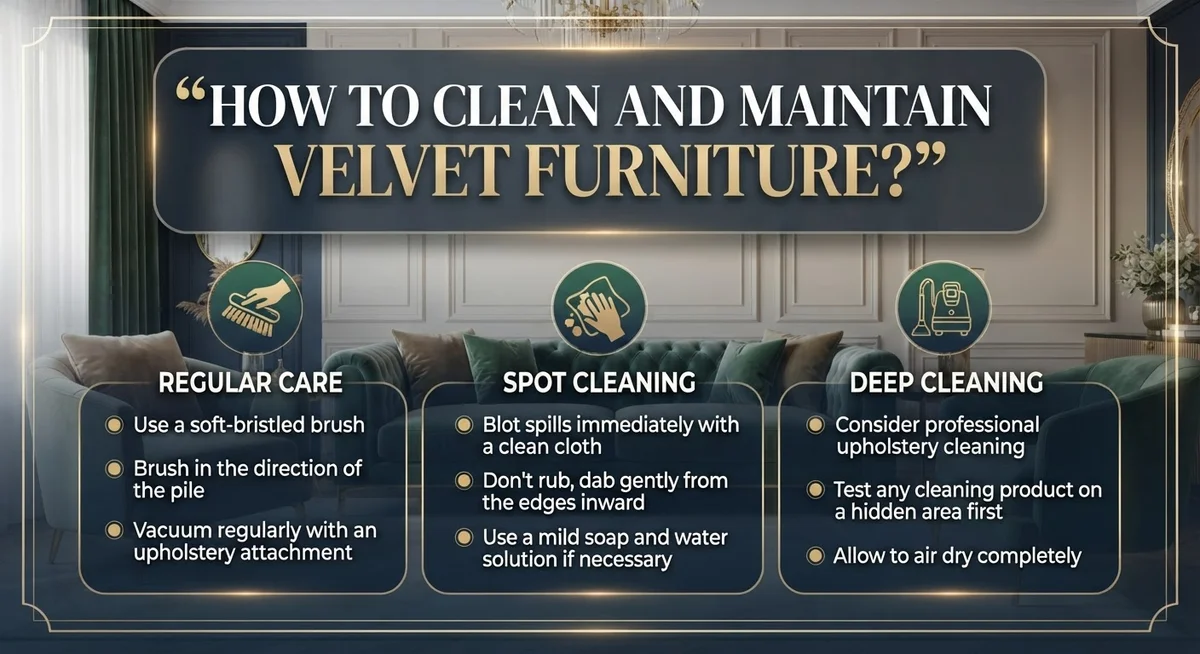
How to Clean and Maintain Velvet Furniture?
Velvet furniture adds instant charm to any room. It feels soft. It looks rich. But this beautiful fabric needs special care to stay that way.
Many people worry about ruining their velvet couch or chair. One wrong move and fibers crush or stains set in forever. This fear stops them from enjoying their furniture fully.
The good news is that cleaning velvet is not hard. You just need the right approach and a bit of patience.
This guide will show you exactly how to keep your velvet furniture looking fresh. We will cover simple vacuuming steps to remove dust and dirt. You will learn how to spot clean stains without damaging the fabric.
We also share tips on using a soft brush to restore that smooth, luxurious texture. Plus, we explain common mistakes people make and how to avoid them.
By the end, you will feel confident caring for your velvet pieces. Your furniture will stay soft, vibrant, and stain free for years to come. Let’s get started on this simple maintenance journey.
In a Nutshell
Taking care of velvet does not need to feel hard. Here is a quick summary to keep your furniture looking soft and new.
-
Vacuum often with a soft brush attachment. This removes dust before it settles deep into the fibers.
-
Treat spills fast. Blot gently with a soapy cloth made from mild dish soap and water.
-
Never scrub the fabric. Gentle dabbing protects the delicate pile and prevents crushing.
-
Skip vinegar and alcohol based cleaners. These can damage natural velvet fibers and dull the fabric’s shine.
-
Steam crushed spots against the direction of the pile. This simple trick restores that soft, plush look instantly.
-
Brush regularly with a brass velvet brush. It keeps the texture smooth and prevents matting over time.
Small habits make a big difference here. Consistent care stops stains from setting and keeps fibers looking fresh.
Follow these simple steps and your velvet furniture will stay beautiful for years. It really is that simple to maintain its luxurious feel.
Understanding Velvet Fabric and Why It Needs Special Care
Velvet is a luxurious fabric made from densely packed fibers that stand upright. These fibers create that soft, plush feeling you love. However, this same structure makes velvet vulnerable to damage.
The fibers in velvet crush easily when pressure is applied. Once crushed, they lay flat instead of standing up. This flattens the fabric’s appearance and changes how light reflects off it. That’s why you see darker patches on velvet furniture that gets heavy use.
Velvet attracts dust and dirt quickly because of its texture. The fibers trap particles between them. This is why regular vacuuming matters so much. Without it, dust settles deeper into the fabric and becomes harder to remove later.
Spills pose another challenge for velvet owners. The fabric absorbs liquids fast because of how tightly the fibers pack together. When liquid soaks in, it spreads and sets quickly. This is why speed matters when accidents happen. The longer a spill sits, the more it bonds with the fibers.
Natural velvet and synthetic velvet react differently to cleaning products. Natural velvet comes from cotton or silk. Synthetic velvet uses polyester or nylon. Some cleaners work well on one type but damage the other. For example, vinegar can harm natural velvet but works fine on synthetic versions.
The pile direction also affects how you care for velvet. The pile is the direction the fibers naturally lay. Brushing against the pile can damage fibers. Brushing with the pile helps restore the fabric’s smooth appearance.
Understanding these facts helps you make better choices. You’ll know why certain cleaning methods work and others don’t. This knowledge prevents costly mistakes. It keeps your velvet furniture looking beautiful and feeling soft for many years ahead.
Essential Tools and Supplies for Velvet Maintenance
You need specific tools to keep velvet looking its best. The right supplies make cleaning easier and protect your fabric from damage.
Start with a soft brush attachment for your vacuum. This tool removes dust and dirt without crushing the pile. Use it weekly on all velvet surfaces. A regular vacuum head will damage the fibers, so always choose the soft option.
A brass velvet brush is essential for regular maintenance. This brush restores the nap and keeps fibers standing upright. Brush gently in the direction of the pile. Use it after vacuuming to refresh crushed areas and maintain that smooth texture.
For spot cleaning, gather basic household items. You need a clean cloth, water, and mild dish soap. Mix one or two drops of soap with one cup of water. Create only the suds on top, not a soapy liquid. This gentle solution cleans stains without soaking the fabric.
An upholstery cleaner with a built in brush handles stubborn marks. This tool combines cleaning solution with a soft brush attachment. It works well for set in stains that simple soap and water cannot remove.
Keep a spray bottle filled with plain water nearby. Use it to dampen cloths before applying them to velvet. Never spray water directly on the furniture, as soaking damages the backing.
White cloths are your best choice for cleaning. Colored cloths may transfer dye onto light velvet. Use lint free options to avoid leaving fibers behind.
A handheld steamer helps restore crushed areas. Steam against the pile direction to lift flattened fibers. This simple tool brings new life to worn spots.
Store these supplies in one accessible location. Having everything ready means you can treat spills immediately. Quick action prevents stains from setting into the fabric permanently.
Step-by-Step Guide to Cleaning Velvet Furniture
Start by checking the care label on your velvet furniture. Different velvet types need different approaches. Natural velvet (cotton or silk) requires gentler treatment than synthetic velvet.
Vacuum your velvet weekly using only the soft brush attachment. Never use a hard bristle brush or the regular vacuum head. Move the attachment gently across the fabric in one direction. This removes dust and dirt before they settle into the pile.
For fresh spills, act immediately. Blot the area with a clean white cloth. Press down gently without rubbing. Rubbing crushes the fibers and spreads the stain deeper into the fabric. Keep pressing until the cloth stops absorbing liquid.
Mix a simple cleaning solution at home. Combine 1 to 2 drops of dish soap with 1 cup of water. Stir gently to create suds only. The suds do the work, not the liquid itself.
Dip a clean white cloth into the suds. Squeeze out excess water so the cloth is barely damp. Apply it to the stained area with light pressure. Work from the outside of the stain toward the center. This prevents the stain from spreading.
Use a clean damp cloth with plain water to remove soap residue. Blot gently until no suds remain. Allow the furniture to air dry completely before using it again.
For stubborn marks that won’t budge, use an upholstery cleaner designed for delicate fabrics. Follow the product instructions carefully. Always test any cleaner on a hidden area first.
Never soak velvet or drench it with water. Avoid vinegar and alcohol based cleaners. These damage the fibers and can cause discoloration.
Restore crushed areas by holding a handheld steamer just above the fabric. Direct the steam against the pile direction. The heat relaxes the fibers and helps them stand upright again. Keep the steamer moving to avoid oversaturating one spot.
How to Restore Crushed or Flattened Velvet Fibers
Crushed velvet happens when the delicate pile gets pressed down. This flattens the fibers and changes how light reflects off the fabric. The good news is that you can restore the pile with simple methods.
Steam is your best tool for this job. Hold a handheld steamer about 6 inches above the crushed area. Move it slowly across the fabric in the direction of the pile. The heat and moisture help the fibers stand back up naturally.
Work against the pile direction first. This lifts the flattened fibers more effectively. Then brush gently in the correct pile direction to smooth everything down. The combination of steam and brushing works better than either method alone.
Let the fabric dry completely after steaming. Don’t touch or sit on the area while it’s still wet. Wet velvet is more delicate than dry velvet. Wait at least 2 to 3 hours before using the furniture again.
For minor crushing from regular use, try a soft brush alone. Brush the area gently in circular motions. Sometimes this restores the pile without needing steam. Test this on a hidden spot first to make sure it works.
Prevent crushing by rotating cushions regularly. Move them around so weight distributes evenly. Flip pillows daily if possible. This stops one area from getting too much pressure.
Avoid sitting in the same spot constantly. Different family members should use different areas of the couch. This simple habit prevents permanent crushing in high traffic zones.
If crushing happens in multiple spots, steam the entire furniture piece. This gives everything a uniform appearance. The process takes longer but produces better results than spot treating.
Heavy crushing that doesn’t respond to steaming may need professional help. Some damage becomes permanent if the fibers break rather than just flatten.
Daily and Weekly Maintenance Tips for Long-Lasting Velvet
Velvet furniture needs consistent care to stay beautiful. The good news is that daily and weekly maintenance takes just minutes and prevents most problems before they start.
Vacuum your velvet every week using the soft brush attachment on your vacuum. This removes dust, crumbs, and debris that can settle into the pile. Gentle suction is key because velvet fibers crush easily under pressure. Move the vacuum slowly across the furniture in one direction.
Fluff and flip your cushions twice a week. This prevents one area from getting compressed while other spots stay plump. Rotate cushions so different family members sit on different sections. When everyone uses the same spot, that area flattens faster than the rest.
Address spills immediately. Fresh spills are much easier to handle than dried stains. Blot the area gently with a clean white cloth. Never rub or scrub because this pushes liquid deeper into the fibers and crushes them. If the spill is wet, use a cloth to absorb as much liquid as possible first.
Keep food and drinks away from your velvet furniture. Velvet absorbs stains quickly, and some marks become permanent if left too long. This simple habit prevents most cleaning headaches.
Dust your velvet monthly with a soft cloth. This keeps the surface fresh between vacuuming sessions. Wipe gently in the direction of the pile.
Check your furniture weekly for any spots or marks. Catching problems early makes cleaning easier. Small stains respond better to gentle treatment than old, set stains.
Store your cleaning supplies nearby so you can act fast when accidents happen. A spray bottle with plain water, white cloths, and your soft brush should be within reach. Quick action saves your furniture from permanent damage and keeps maintenance simple.
Common Mistakes to Avoid When Cleaning Velvet
Velvet furniture demands special care because its delicate fibers crush easily and stains set quickly. Understanding what NOT to do protects your investment and keeps your pieces looking fresh.
Never soak or drench your velvet fabric with water. Excessive moisture damages the pile and can cause water stains that are hard to remove. Even when spot cleaning, use minimal liquid. Apply just enough dampness to lift the stain without saturating the material.
Avoid using vinegar on natural velvet. While vinegar works on some fabrics, it can discolor velvet and weaken its fibers. Stick to gentle dish soap solutions instead. Similarly, alcohol-based detergents strip the fabric’s natural oils and leave residue behind.
Don’t scrub with stiff or hard brushes. This crushes the delicate pile permanently. Vigorous rubbing also pushes stains deeper into the fibers rather than lifting them out. Use soft-bristled brushes only, and apply gentle pressure with light dabbing motions.
Leaving stains untreated is a critical mistake. Spills dry and set into the fabric within hours, making removal nearly impossible later. Address spills immediately before they become permanent marks.
Never rub stains vigorously. This aggressive approach damages the pile and spreads the stain across a larger area. Instead, blot gently with a clean cloth. Work from the outer edges toward the center to prevent the stain from expanding.
Keep food and drinks away from your velvet furniture whenever possible. These items cause stains that require professional cleaning if they set. Prevention is far easier than removal.
Finally, don’t ignore crushed areas. Regular maintenance prevents most problems, but when crushing happens, address it promptly with steam or a soft brush. Waiting allows the damage to become more permanent and harder to fix.
Troubleshooting Stubborn Stains and Odors
Stubborn stains on velvet furniture require patience and the right approach. The key is acting fast before stains set into the fibers permanently.
Start by blotting the stain with a clean, dry cloth. Press gently without rubbing. This removes excess liquid and prevents the stain from spreading deeper into the pile.
For dried stains, create a gentle cleaning solution. Mix one to two drops of dish soap with one cup of water. The goal is to make suds, not a soapy liquid. Use only the foam layer on top of your solution.
Dip a soft cloth into the suds and apply it to the stained area with light pressure. Work from the outside edge toward the center to prevent the stain from spreading. Let the solution sit for a few minutes, then blot with a clean, damp cloth. Repeat this process until the stain fades.
For wine, juice, or other colored stains, you may need multiple applications. Always allow the fabric to dry completely between treatments.
Odors in velvet furniture often come from spills, pet accidents, or moisture trapped in the pile. Regular vacuuming with a soft brush attachment helps prevent odor buildup. Air your furniture in sunlight when possible, as natural light eliminates many odors naturally.
For stubborn smells, sprinkle baking soda lightly over the affected area. Let it sit for several hours, then vacuum thoroughly. This absorbs odors without damaging the delicate fibers.
If odors persist after these steps, the problem may be moisture trapped deep in the cushion. Ensure your furniture dries completely after any cleaning. Use fans to increase air circulation around the piece.
Never use perfumes or sprays to mask velvet odors. These products can leave their own stains and damage the pile. Proper drying and regular maintenance prevent most odor problems from developing in the first place.
Final Thoughts
Velvet furniture brings warmth and elegance to any room. But that beauty depends on how well you care for it.
Gentle handling is the secret to keeping velvet looking new. The fibers are delicate, and rough treatment damages them fast.
Regular care matters more than deep cleaning. A quick vacuum session and a soft brush pass each week keep dust and dirt from settling into the pile.
Prevention beats correction every time. Catching spills right away saves you from tough stains later. Waiting only makes the problem harder to fix.
Always test any cleaning solution on a hidden spot first. This simple step protects your fabric from unexpected damage or discoloration.
Remember that velvet responds well to soft, careful methods. Suds made from mild dish soap work better than harsh chemicals. A brass brush restores the nap without harming the fibers underneath.
Steam is your friend when fibers get crushed. Light steam applied against the pile direction lifts the fabric back to its original texture.
Patience is key with velvet care. Rushing through cleaning often leads to mistakes that are hard to undo. Take your time and use light pressure throughout the process.
Think of velvet maintenance as an ongoing habit, not a one time task. Small efforts spread across weeks protect your furniture far better than occasional deep cleaning sessions.
Your velvet piece can last for years with the right attention. Simple tools like a soft brush attachment and a clean cloth go a long way.
When stains or odors seem impossible to handle, professional cleaning services offer a reliable backup option. They have the experience to treat delicate fabrics safely.
In the end, velvet furniture rewards careful owners. A little consistent effort keeps its soft texture and rich color looking fresh for a long time.
Frequently Asked Questions
Can I use a regular vacuum on velvet furniture?
Yes, but use the soft brush attachment only. Regular vacuum heads can damage the delicate pile. Vacuum in the direction of the nap, moving slowly and gently. Do this once a week to prevent dust from settling into fibers.
What’s the best way to handle fresh spills?
Act fast. Blot the spill immediately with a clean, dry cloth. Press gently without rubbing. For liquid spills, blot from the outside edges toward the center to prevent spreading. Never rub or scrub the area.
How do I remove crushed spots from velvet?
Steam works best for this problem. Hold a steamer or iron (on low heat) above the crushed area. Move it against the pile direction. The steam relaxes the fibers and helps them spring back. Test on a hidden spot first to be safe.
Is dish soap safe for velvet cleaning?
Yes, but use it sparingly. Mix 1 to 2 drops of dish soap with 1 cup of water. Whip the mixture to create suds only. Apply the suds to stains with a soft cloth, never the soapy water itself. This gentle approach lifts dirt without soaking the fabric.
When should I call a professional cleaner?
If stains won’t budge after gentle attempts or if odors persist deep in the cushions, professional help is wise. They have specialized equipment and knowledge for tough situations. This prevents you from accidentally damaging your furniture further.

Phil is the founder and creative mind behind Aesthetic Space Finds, a home decor enthusiast dedicated to helping people transform their living spaces through honest product reviews, in-depth comparisons, and expert buying guides. With a keen eye for design and a passion for discovering hidden gems in the world of home accessories, Phil curates content that makes stylish, functional living accessible to everyone.


