
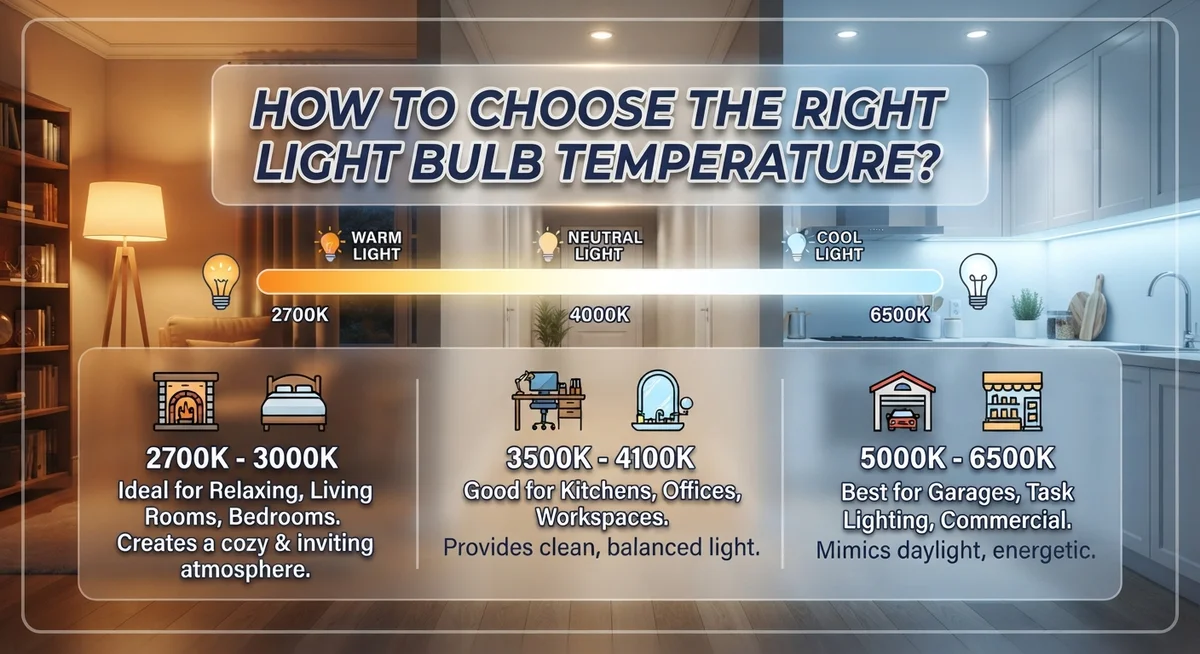
How to Choose the Right Light Bulb Temperature?
Have you ever bought a light bulb and felt disappointed once you turned it on? Maybe it looked too yellow or too harsh for the room. This happens because of light bulb temperature, and it changes everything about a space.
Light bulb temperature is measured in Kelvin (K). This number tells you how warm or cool the light will look. A lower Kelvin gives you soft, yellow light. A higher Kelvin gives you bright, blue light.
Choosing the right temperature matters more than most people think. The wrong choice can make a cozy bedroom feel like a hospital room. It can also make a workspace feel too dim to focus in.
This guide will help you understand the Kelvin scale in simple terms. We will walk through the best temperatures for each room in your home. You will also learn about common mistakes people make when picking bulbs.
By the end, you will know exactly how to match light temperature to any room’s purpose. No more guessing games at the store. Just simple, practical advice you can use today.
In a Nutshell
Here is a quick summary to help you choose fast.
-
Kelvin (K) controls color. Lower numbers give warm, yellow light. Higher numbers give cool, blue light.
-
Warm light (2700 to 3000K) works best in living rooms, bedrooms, and dining areas. It feels cozy and relaxed.
-
Neutral light (3500 to 4000K) suits kitchens and bathrooms. It gives clear, task friendly brightness without feeling harsh.
-
Cool light (4000 to 5000K) fits offices and commercial spaces. It boosts focus and visibility during work hours.
-
Avoid mixing temperatures in one room. This creates a messy, uneven look that feels unpleasant.
-
Never use 5000K+ bulbs in bedrooms. They create a cold, clinical feel that ruins relaxation.
-
Always match Kelvin to the room’s function, not just personal taste. This simple rule prevents most lighting mistakes.
Keep a color temperature chart handy when shopping. It makes picking the right bulb much easier and saves you from returns later.
What Is Color Temperature and How Is It Measured?
Color temperature describes how warm or cool light appears to your eyes. Scientists measure this quality using the Kelvin scale, named after physicist William Thomson Kelvin.
The Kelvin scale runs from very low numbers to very high numbers. Lower Kelvin values produce warmer, more yellow light. Higher Kelvin values create cooler, more blue light. Think of it like this: a sunset gives off warm yellow tones (low Kelvin), while a clear blue sky at noon gives off cool blue tones (high Kelvin).
Light bulbs typically range from 2000K to 6500K in home and commercial settings. The scale helps you understand exactly what color of light you will get before you buy.
Here is how the scale breaks down into practical ranges. Warm light falls between 2700K and 3000K. This light feels cozy and relaxing, similar to candlelight or sunset. Neutral light sits between 3500K and 4000K. This light feels balanced and natural, neither too yellow nor too blue.
Cool light starts at 4000K and goes up to 5000K or higher. This light feels bright and energetic, like daylight in a busy office.
The measurement system works because color temperature directly affects how your brain perceives a space. Your eyes and brain work together to sense whether light feels inviting or harsh, sleepy or alert.
When you shop for bulbs, you will see the Kelvin number printed on the packaging. This number tells you exactly what color temperature that bulb produces. Understanding this simple scale takes the guesswork out of choosing the right bulb for any room in your home.
Understanding the Kelvin Scale: Warm, Neutral, and Cool Light
The Kelvin scale is the standard way to measure light color. It runs from low numbers to high numbers, and each point tells you something different about the light you will get.
Lower Kelvin numbers mean warmer light. Light at 2700K looks yellow and soft. This light feels cozy and relaxed. Your brain associates warm light with sunset and candlelight. It makes spaces feel intimate and calm.
Higher Kelvin numbers mean cooler light. Light at 5000K looks blue and bright. This light feels sharp and energetic. Your brain associates cool light with daylight and alert moments. It makes spaces feel clinical and active.
The middle range sits between warm and cool. Light at 3500K to 4000K is neutral. It does not feel too yellow or too blue. This range works well when you need balance between comfort and function.
Understanding these ranges helps you match light to your needs. Warm light (2700 to 3000K) relaxes your mind and body. Use it in bedrooms, living rooms, and dining areas. Neutral light (3500 to 4000K) keeps you focused without feeling harsh. Use it in kitchens and bathrooms where you need to see details.
Cool light (4000 to 5000K and higher) boosts alertness and clarity. Use it in offices and work spaces where precision matters.
The key mistake people make is mixing temperatures in one room. When you combine warm and cool bulbs in the same space, your eyes get confused. The room feels disjointed and uncomfortable.
Always check the Kelvin number on the bulb package before you buy. This simple step prevents regret and ensures your space feels exactly how you want it to feel.
Why Light Temperature Matters for Mood and Function
Light temperature directly shapes how you feel in a room. Your brain responds to color temperature in specific ways, and choosing the right one makes spaces work better for you.
Warm light relaxes your nervous system. When you sit under 2700K to 3000K bulbs, your body produces more melatonin. This hormone tells you to slow down and rest. That’s why warm light feels cozy in bedrooms and living rooms. Your mind naturally shifts into a calmer state.
Cool light sharpens your focus. Bulbs at 4000K to 5000K boost alertness and mental clarity. These temperatures mimic daylight, so your brain stays active and engaged. This works perfectly in kitchens where you prepare food, bathrooms where you groom, and offices where you work.
Neutral light sits in the middle at 3500K to 4000K. It balances both effects. You get enough brightness to see details without feeling overstimulated or too drowsy.
The mistake most people make is ignoring room function. You might love the look of cool light, but using it in your bedroom keeps you awake at night. Your circadian rhythm gets confused. Similarly, warm light in a kitchen makes it harder to see what you’re cooking.
Match light temperature to what you do in each space. Your bedroom needs warmth for sleep. Your kitchen needs brightness for safety. Your office needs clarity for concentration.
Pay attention to how different temperatures make you feel. Spend time under various bulbs before deciding. Your mood, sleep quality, and productivity all depend on getting this choice right.
Room-by-Room Guide to Choosing the Right Kelvin
Your bedroom deserves warm light between 2700K and 3000K. This range mimics sunset and signals your body to wind down. Warm light triggers melatonin production, the hormone that helps you sleep well.
Your living room works best with 2700K to 3000K bulbs too. This creates a cozy, inviting atmosphere where you relax with family or friends. The soft yellow glow makes conversation feel intimate and comfortable.
Your dining room pairs perfectly with 2700K to 3000K lighting. Warm light flatters skin tones and makes food look appetizing. Guests feel welcomed and at ease around your table.
Your kitchen needs a different approach. Choose 3500K to 4000K bulbs for task lighting. This neutral range lets you see food clearly while chopping, cooking, and cleaning. You need visibility without the clinical feel of very cool light.
Your bathroom works well with 3500K to 4000K bulbs. This helps you see your face clearly for grooming tasks. The neutral temperature provides enough brightness without harsh blue tones that make mornings feel jarring.
Your home office should use 4000K to 5000K bulbs. Cool light sharpens focus and boosts productivity during work hours. Your eyes stay alert, and you maintain mental clarity through long tasks.
Your entryway or hallway can use 3500K to 4000K. This neutral range provides safe visibility without feeling cold or unwelcoming as people enter your home.
Match each room’s temperature to its purpose. Bedrooms and living spaces get warm. Work areas and kitchens get neutral to cool. This simple rule prevents the common mistake of mixing temperatures in one space, which confuses your eyes and disrupts the room’s mood.
Step-by-Step: How to Select the Right Bulb Temperature
Start by identifying what you do in each room. Your bedroom is for sleep and relaxation, so it needs warm light. Your kitchen is for cooking and food prep, so it needs brighter light. Your home office is for focus and detail work, so it needs crisp, clear light.
Write down the Kelvin range for each space. Bedrooms work best at 2700K to 3000K. Kitchens and bathrooms perform well at 3500K to 4000K. Home offices and workspaces shine at 4000K to 5000K. This simple list keeps you organized while shopping.
Visit a store and compare bulbs side by side if possible. Hold packaging samples under different lighting to see how colors look. This hands on approach beats guessing at home. You’ll see exactly how warm or cool each temperature feels.
Check the package label carefully before you buy. The Kelvin number appears clearly on every bulb box. Don’t rely on names like “soft white” or “daylight” alone. Numbers tell the true story.
Consider your room’s purpose over personal preference. Yes, you might love cool light, but cool light in a bedroom keeps you awake. Your nervous system responds to color temperature, not just what you think you like. Match the light to the room’s function first.
Buy one bulb and test it at home before purchasing more. Different rooms have different wall colors and natural light. A bulb that looks perfect in the store might feel wrong in your space. Testing prevents expensive mistakes and wasted bulbs.
Common Mistakes When Choosing Light Bulb Temperature
People make several predictable mistakes when picking light bulb temperature. Understanding these errors helps you avoid them.
The biggest mistake is using overly cool light in bedrooms. Bulbs rated 5000K or higher feel clinical and harsh in sleeping spaces. Your body needs warmth to wind down. Cool light actually signals your brain to stay alert. This disrupts your sleep cycle and makes relaxation impossible.
Mixing multiple temperatures in one room creates visual chaos. Some people install 2700K bulbs in one fixture and 4000K in another. Your eyes struggle to adjust between warm and cool light. The space feels disjointed and uncomfortable. Stick to one temperature throughout each room.
Another common error is choosing too warm light for work areas. Your kitchen or home office needs clarity and focus. Bulbs below 3500K make it hard to see details. You squint more and feel less productive. Task spaces demand at least 3500K to 4000K.
The opposite mistake happens too. People select overly cool light for cozy rooms. A living room bathed in 5000K feels sterile and unwelcoming. These spaces should invite relaxation, not feel like an office. Warm light between 2700K and 3000K transforms a room into a sanctuary.
Many shoppers ignore the room’s actual function. They choose based on personal preference alone. Your bedroom might feel better to you under bright light, but your sleep quality will suffer. Match temperature to what the space does, not just what feels nice in the moment.
Always check the Kelvin number on the package before checkout. This simple step prevents most temperature mistakes.
Tips for Balancing Light Temperature Across Your Home
Balancing light temperature across your home requires understanding how different spaces function. Each room serves a specific purpose, and your lighting should support that purpose.
Start by mapping your home room by room. Write down what activities happen in each space. Your bedroom is for sleep and relaxation. Your kitchen is for cooking and food prep. Your office is for focus and detail work. This simple exercise guides your temperature choices.
Consistency matters within each room. If you use 2700K in your ceiling fixture, use the same temperature in your table lamps and wall sconces. Mixing warm and cool light in one space creates an uncomfortable, disjointed feeling. Your eyes struggle to adjust, and the room feels chaotic.
Consider transition zones carefully. Hallways and entryways connect different rooms, so 3500K to 4000K works well. This neutral range bridges the gap between cozy bedrooms and bright kitchens without jarring your eyes.
Pay attention to natural light patterns too. Rooms with lots of windows during daytime may feel better with slightly warmer bulbs indoors. Dark rooms or spaces without windows benefit from brighter, cooler temperatures to prevent a cave-like atmosphere.
Test one bulb before committing to an entire room. Install it, live with it for a few days, and notice how it affects your mood and productivity. What feels right on the store shelf may feel wrong in your actual space.
Document your choices. Keep a simple list of which Kelvin temperature you chose for each room. This prevents confusion when you need replacement bulbs later and ensures your home stays balanced over time.
Troubleshooting: Fixing a Space That Feels Too Harsh or Too Dim
A space that feels too harsh usually means your light temperature is too cool. Bulbs rated 5000K or higher produce bright blue light. This light works well in offices but feels uncomfortable in living areas. You need to switch to warmer bulbs instead.
Start by measuring how harsh the light actually feels. Stand in the room at different times of day. Notice if the light makes you squint or feel stressed. These are signs you need lower Kelvin numbers.
Replace your current bulbs with 2700K to 3000K options. Warm light feels softer and more relaxing. Your eyes won’t strain as much. The space will feel instantly more comfortable. Give yourself a few days to adjust before making more changes.
If your space feels too dim, the problem might be different. You could have low wattage bulbs. You might also have too few light fixtures. Check how many bulbs you’re actually using in each room.
Count your light sources carefully. A bedroom with only one ceiling fixture will feel dimmer than one with ceiling light plus bedside lamps. Add more fixtures if possible. This spreads light more evenly across the room.
You can also try slightly cooler temperatures if the space feels dull. Move from 2700K to 3000K. This adds brightness without feeling clinical. Test one bulb first to see if it helps.
Document what works in each room. Write down the Kelvin number and number of fixtures. This prevents you from repeating mistakes later. Keep notes about how the light feels at different times of day. Your preferences matter, but room function comes first.
Final Thoughts
Choosing the right light bulb temperature does not need to feel hard. Once you understand the Kelvin scale, everything else falls into place.
Lower numbers create warm, cozy light. Higher numbers create cool, bright light. This simple rule guides every decision you make.
Your living room and bedroom work best with 2700K to 3000K bulbs. These spaces need relaxation, not stimulation.
Kitchens and bathrooms need something different. Aim for 3500K to 4000K in these areas. You need clear visibility for tasks like cooking and grooming.
Offices and workspaces demand more energy. Choose 4000K to 5000K bulbs here. Bright, cool light keeps your mind alert and focused.
Remember the biggest mistakes people make. Never install harsh, cool bulbs in bedrooms. Never mix different temperatures within a single room.
Think about how each room functions before you shop. A cozy reading nook needs different light than a home office. Match the temperature to the purpose, not just your personal taste.
Testing helps too. Buy one bulb before committing to an entire room. See how the light feels during morning and evening hours.
Small adjustments make a big difference. If a space feels too harsh, switch to warmer bulbs. If it feels dim or dull, try a slightly cooler option instead.
Keep a simple record of what works. Write down the Kelvin number for each room. This makes future shopping much easier.
Good lighting transforms how a space feels. It affects your mood, your focus, and your comfort every single day.
Take your time choosing the right temperature for each room. Your home will feel more balanced and welcoming once you get it right.
Frequently Asked Questions
What does the Kelvin number actually mean?
The Kelvin scale measures how yellow or blue your light appears. Lower numbers (2700K) produce warm, yellow light. Higher numbers (5000K and above) produce cool, blue light. Think of it like a sunset versus a bright noon sky. The number tells you the color temperature, not the brightness.
Can I mix different Kelvin temperatures in one room?
No, mixing temperatures in the same space creates a confusing, inconsistent feeling. Your brain notices when light shifts from warm to cool. Pick one temperature for each room and stick with it. If you use 2700K in your ceiling light, use 2700K in your table lamp too. Consistency makes the space feel intentional and calm.
Why does my bedroom feel too clinical with cool bulbs?
Cool light (5000K and higher) mimics office and commercial spaces. Your brain associates it with work and alertness. Bedrooms need warm light to signal relaxation time. Use 2700K to 3000K instead. Warm light tells your body it’s time to wind down, which helps you sleep better.
What temperature should I use for tasks like cooking or reading?
Task areas need enough light to see clearly without strain. Kitchens and bathrooms work best with 3500K to 4000K. This neutral range gives you clarity without feeling too harsh. It’s bright enough for detail work but not as clinical as office lighting. You’ll see colors accurately and feel comfortable working.
How do I know which temperature to choose if I’m unsure?
Start with the room’s purpose. Relaxation spaces get 2700K to 3000K. Work and task areas get 3500K to 4000K. Test one bulb first before buying many. Spend a few hours in the space and notice how it feels. Your comfort matters more than any rule.

Phil is the founder and creative mind behind Aesthetic Space Finds, a home decor enthusiast dedicated to helping people transform their living spaces through honest product reviews, in-depth comparisons, and expert buying guides. With a keen eye for design and a passion for discovering hidden gems in the world of home accessories, Phil curates content that makes stylish, functional living accessible to everyone.


