
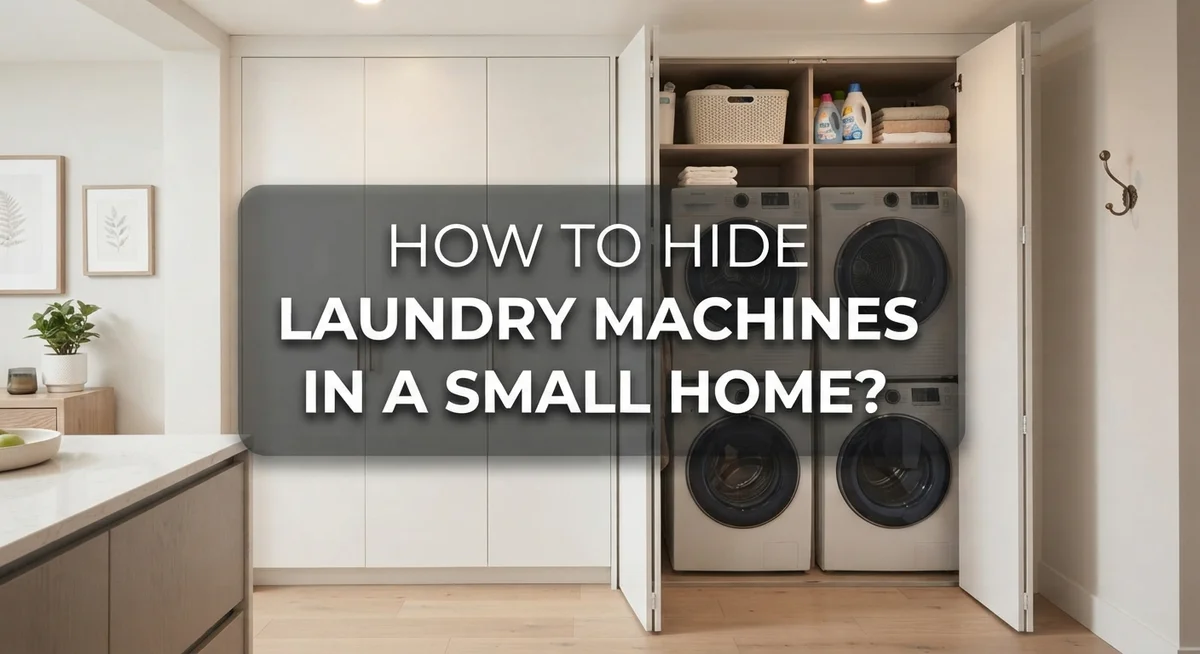
How to Hide Laundry Machines in a Small Home?
Small homes rarely have room for a laundry closet that looks nice. Your washer and dryer often sit in plain view. This can make even a tidy home feel cluttered.
The good news? You can hide your laundry machines without a big renovation. Simple solutions like curtains, cabinets, or room dividers can transform this eyesore into a hidden feature.
This guide will show you easy and budget friendly ways to conceal your laundry area. We will cover built-in cabinetry options that blend with your walls. You will also learn about curtain rods, vinyl wraps, and decorative paper for a quick fix.
We will walk through the key steps to measure your space correctly. This ensures your chosen cover fits your machines perfectly.
You will also learn about common mistakes to avoid. Blocking vents or ignoring machine spacing can cause bigger problems later.
By the end of this article, you will know how to make your laundry area disappear. Your small home will feel more organized and stylish in no time.
In a Nutshell
Here is a quick recap of what you need to know.
-
Measure first. Check the height and width of your laundry space before buying any materials. This step saves you from costly mistakes.
-
Choose your hiding method. Options include built in cabinets, curtain rods with fabric, or vinyl wraps. Pick one that fits your budget and style.
-
Leave room to breathe. Machines need proper ventilation and spacing to work safely. Never seal them in tightly.
-
Plan for access. You should always be able to reach your machines for repairs. Good concealment still allows easy opening.
-
Add smart storage. Use extra space for baskets or shelves. This keeps detergent and supplies close by.
-
Match your decor. Simple finishes like peel and stick paper or paint can blend machines into your room. Small touches make a big difference.
Follow these tips, and your laundry area will look neat and tidy. You get a functional space without losing style or safety.
Why Concealing Laundry Machines Makes Sense in Small Spaces
Small homes face a real challenge. Laundry machines take up valuable floor space. They also stick out visually in rooms where every square foot counts.
Hiding your machines makes your space feel bigger. When appliances disappear from view, your room looks cleaner and more organized. This simple change affects how you feel about your home every single day.
Concealing laundry equipment also protects your décor style. Washers and dryers have industrial looks that clash with living areas, bedrooms, or kitchens. A hidden machine keeps your design choices consistent throughout the room.
Practical benefits matter too. Hidden machines reduce noise that travels through small homes. Sound from spinning cycles or water filling won’t disturb other rooms. Your family enjoys a quieter, more peaceful environment.
Hidden laundry areas create mental separation. Your mind stops treating the space as a laundry room and sees it as part of the main living area instead. This psychological shift makes small homes feel more spacious.
Concealment also protects machines from dust and direct sunlight. Covered appliances last longer because they face fewer environmental stressors. Your investment stays protected and functional for years.
Storage opportunities emerge naturally. When you hide machines, you gain space for baskets, detergent bottles, and cleaning supplies. Everything stays organized in one contained area.
Finally, hidden laundry machines increase home appeal. Guests see a polished, intentional space instead of utility equipment. This matters if you ever rent out rooms or sell your home.
Small homes require smart thinking. Hiding laundry machines solves multiple problems at once. Your space becomes more attractive, functional, and peaceful all at the same time.
Assessing Your Space: Measurements and Planning Basics
Start by measuring your laundry space carefully. You need the height, width, and depth of the area where your machines sit. Write down these numbers so you don’t forget them.
Next, measure the actual dimensions of your washer and dryer. Check how far they stick out from the wall. This matters because your hiding solution must fit around them without blocking access.
Look at your ceiling height too. Some hiding methods need vertical clearance. If your machines sit under a cabinet or shelf, measure the space above them.
Check the distance between your machines and nearby walls. Most washers and dryers need at least 1 to 2 inches of space on the sides for proper airflow. This spacing prevents overheating and keeps your machines working safely.
Identify where your utility connections are located. Your water lines, drain pipes, and electrical outlets determine how much flexibility you have with placement. Don’t plan a solution that blocks access to these connections.
Examine the floor condition. Is it level? Uneven floors can cause problems when you add cabinetry or frames around your machines. You may need to adjust or add support.
Consider traffic flow in your home. How often do you need to access your machines? Plan your measurements around the path people walk. Your hiding solution shouldn’t make laundry day harder.
Take photos of your space from different angles. These images help you visualize different hiding options later. Photos also serve as reference when you’re shopping for materials or discussing ideas with others.
Write everything down on paper or in your phone. Accurate measurements are the foundation for any successful concealment project.
Built-In Cabinetry and Closet Solutions
Built in cabinetry offers a clean, permanent solution for hiding laundry machines. This approach works best when you have a dedicated laundry closet or corner space. Cabinets create a seamless look that matches your home’s interior design.
Start by framing the opening with basic lumber around your washer and dryer. You’ll need to secure 1 by 4 boards to create a sturdy frame structure. Wood blocks help support the frame and keep everything level and secure.
Add cabinet doors that swing open to reveal your machines. You can choose doors that match your kitchen cabinets or bathroom vanity for a cohesive appearance. Soft close hinges prevent slamming and add a polished feel to your space.
Make sure doors open fully without hitting walls or other objects. Measure your swing clearance before installation begins. This prevents frustration during everyday use.
Closet solutions work similarly but use your existing wall cavity. Install a rod across the opening and hang a curtain or fabric panel in front. This method costs less than full cabinetry and still hides your machines effectively.
Consider adding shelving inside your cabinet or closet for detergent, dryer sheets, and cleaning supplies. These shelves maximize your storage without taking up additional floor space in your home.
Always leave gaps for air circulation around your machines. Heat and moisture need escape routes to prevent damage. Install vents or louvers in your cabinet doors to allow proper airflow.
Access remains crucial for maintenance and repairs. Make sure you can easily remove cabinet doors or pull back curtains when needed. Your future self will appreciate this planning when a technician visits.
Step-by-Step: Building a Simple Concealment Frame
Start by gathering your materials. You’ll need basic lumber boards, wood blocks for framing, a drill, screws, and a level. These items create the foundation for your concealment frame.
Measure twice before cutting anything. Take accurate measurements of your washer and dryer opening, including height and width. Add a few extra inches to ensure your frame fits properly around both machines.
Cut your lumber to size using a saw or ask your supplier to cut pieces for you. Most people use standard 1 inch by 4 inch boards for the frame sides and top. Wood blocks serve as spacers and support points where your frame connects to walls or floors.
Lay out your pieces on the floor first. This helps you visualize how everything fits together before you start drilling. Check that corners form right angles using a simple square tool.
Drill pilot holes before inserting screws. This prevents wood from splitting and makes assembly easier. Secure your frame pieces together with appropriate screws for wood construction.
Position your assembled frame around your machines. Use a level to ensure it stands straight and doesn’t tilt. Secure the frame to walls using brackets or fasteners rated for your wall type.
Leave adequate space between your machines and the frame. You need at least 2 to 3 inches for air circulation on sides and back. This gap prevents heat buildup and allows moisture to escape properly.
Check that your frame doesn’t block access to water connections, drain lines, or electrical outlets. You’ll need to reach these areas for maintenance and repairs.
Test that doors or panels will open freely once installed. Make sure nothing interferes with the frame operation before finishing your project.
Creative Visual Barriers: Curtains, Dividers, and Wraps
Curtains, dividers, and wraps offer flexible ways to conceal your laundry machines without permanent installation. These solutions work well in small homes because you can adjust or remove them easily.
Curtain rods are one of the simplest options. Install a rod on the wall above your washer and dryer, then hang fabric that extends from ceiling to floor. The fabric should be wide enough to cover the entire appliance outline. This method keeps machines accessible while hiding them from view. Choose fabric that matches your room’s color scheme for a polished look.
Decorative room dividers create a separate zone for your laundry area. Position a divider in front of your machines to block the view from the main living space. Dividers come in various styles and heights. They work especially well in open floor plans where laundry machines sit in shared rooms.
Vinyl wraps and peel-and-stick decorative paper transform machine appearance instantly. These coverings stick directly to your washer and dryer surfaces. You can choose patterns, colors, or textures that blend with your home’s interior. Wraps are removable, so you can change the look whenever you want.
Fabric panels mounted on frames offer another option. Create a simple wooden frame around your machines, then attach fabric to the frame. This approach gives you more control over the finished appearance than loose curtains.
Remember that curtains and wraps need regular cleaning because lint and dust accumulate on fabric surfaces. Ensure your chosen barrier doesn’t restrict airflow around machines. Heat and moisture must escape properly to prevent appliance damage and maintain performance over time.
Repurposing Pantry or Kitchen-Adjacent Spaces
A pantry or kitchen adjacent space offers an ideal location for hiding your laundry machines. These areas already serve storage purposes, making them natural candidates for appliance concealment.
Start by measuring your pantry opening. Record the height, width, and depth carefully. Your washer and dryer need clearance on all sides for air circulation and maintenance access. Check that doors and drawers can open fully without obstruction.
Evaluate your current pantry layout. Remove items you can store elsewhere. Consider whether you need shelving above or beside your machines. Many people install shelves above their appliances to maintain storage capacity in the space.
Install a frame around your opening using basic lumber. This creates a structure for mounting cabinet doors or panels. The frame should sit flush against your walls and machines. Leave at least 2 inches of space between your machines and the frame for ventilation.
Attach cabinet doors that match your kitchen style. Doors should swing open completely to allow easy access for loading and unloading clothes. Ensure nothing blocks the door’s path when fully opened.
Address ventilation carefully. Your dryer needs proper airflow to function safely and efficiently. Don’t seal the space completely. Leave gaps at the top or bottom for air circulation. If your dryer vents outside, keep that pathway clear.
Add a small shelf inside your cabinet for detergent, fabric softener, and cleaning supplies. This keeps laundry products organized and accessible.
Consider adding a small light inside your cabinet. This helps you see into the space when doors are open.
Finally, test your setup. Open doors multiple times. Ensure your machines operate normally with the frame in place. Check that heat and moisture escape properly from the space.
Ventilation, Access, and Maintenance Considerations
Proper ventilation keeps your dryer running safely and prevents moisture buildup in your home. When you hide laundry machines, airflow becomes even more critical. Dryers release hot, humid air that needs an exit path. Without it, mold and mildew grow quickly in small spaces.
Install ventilation ducting that runs from your dryer to the outside of your home. The duct should slope slightly downward toward the exterior to prevent moisture from pooling. Check that your concealment solution doesn’t crush or block this duct. Crushed ducts reduce airflow and create fire hazards.
Easy access matters for daily use and repairs. Your concealment shouldn’t make it hard to load and unload clothes. Leave enough clearance in front of machines so you can open doors fully. Plan for someone to reach behind the appliances if needed.
Maintenance requires occasional access to lint traps, water hoses, and electrical connections. Before you install any covering, know where these components sit. Mark their locations so you can access them quickly without removing your entire concealment setup.
Consider installing a removable panel or hinged door section. This approach lets you reach connections without full disassembly. Label water shut-off valves and electrical switches clearly so anyone can find them during emergencies.
Test your setup before finalizing it. Run a full wash and dry cycle with your concealment in place. Check that temperatures stay normal and no heat buildup occurs. Feel the area around your machines during operation. Hot spots indicate ventilation problems that need fixing before you seal everything up permanently.
Common Mistakes to Avoid When Concealing Machines
Many people make critical errors when hiding laundry machines that cause problems later. Understanding these mistakes helps you create a successful concealment solution.
Ignoring spacing requirements is the biggest mistake homeowners make. Washers and dryers need specific clearances around them for proper operation. Your dryer requires at least 1 inch of clearance on the sides and back. Washers need space for the door to open fully. Cramming machines into tight spaces without proper measurements leads to damaged appliances and safety hazards.
Blocking ventilation creates serious issues. Your dryer produces heat and moisture that must escape outside. If you cover the dryer vent opening or restrict airflow, heat builds up inside the cabinet. This causes the dryer to overheat, damages the motor, and creates a fire risk. Always plan your concealment around existing ventilation needs.
Forgetting about maintenance access causes frustration. Lint traps need regular cleaning. Water hoses occasionally leak and require replacement. Electrical connections sometimes need adjustment. If your concealment makes these tasks difficult, you’ll regret the setup quickly.
Failing to include storage space wastes an opportunity. Your hidden laundry area should hold detergent, fabric softener, stain removers, and dryer sheets. Plan for shelving or cabinets inside your concealment solution. This keeps supplies organized and accessible.
Choosing materials that trap heat damages appliances. Never use solid, non-ventilated enclosures without proper airflow. Vinyl wraps and decorative coverings should never completely seal the machines. Heat dissipation matters for longevity and safety.
Neglecting lighting makes the space uncomfortable to use. A small light inside your cabinet helps you see clearly when loading clothes and accessing supplies. This simple addition improves functionality significantly.
Final Thoughts
Hiding laundry machines in a small home comes down to smart planning. You need a solution that looks good and still works well every day.
Function always comes before beauty. A gorgeous cabinet means nothing if your dryer overheats or you cannot reach the lint trap.
Start small if you feel unsure. A curtain rod with fabric costs little and hides your machines fast. You can upgrade to built-in cabinetry later once you know what fits your space.
Measure twice before you buy anything. Small homes leave little room for error. Wrong dimensions waste money and time.
Think about your daily habits too. Do you load laundry every morning? Choose a solution with quick, easy access. Do you only wash clothes on weekends? A more permanent cover might suit you better.
Ventilation deserves your attention no matter which option you pick. Your dryer needs airflow to work safely. Never sacrifice this for looks alone.
Storage adds real value to your setup. Use empty space around your machines for supplies. This keeps your laundry area organized and functional.
Good lighting makes a small difference that feels big. Add a light inside cabinets or closets. This helps you see stains, sort clothes, and handle tasks without frustration.
Remember that your solution should grow with your needs. Choose materials and designs that allow future changes. Life circumstances shift, and your laundry setup should adapt too.
Hiding laundry machines does not require a large budget or major renovation. Simple changes create a big impact. Focus on practical steps first, then add style.
Your small home can feel bigger and neater with the right approach. Take time to plan, measure, and test your solution before finalizing it.
Frequently Asked Questions
Can I hide laundry machines in a kitchen area?
Yes, you can. Many small homes use adjacent pantry space or unused cabinet areas near the kitchen. Measure your opening carefully to ensure your washer and dryer fit comfortably. You’ll need to check that water lines and electrical outlets are accessible. Consider converting a closet that’s close to existing plumbing. This keeps laundry out of sight while staying near the main living areas.
What’s the best way to conceal machines that stick out from the wall?
Curtain rods work well for protruding units. Install a rod on either side of your appliances and hang fabric that extends from the wall. The fabric should be long enough to hide the full depth of your machines. Choose a color or pattern that matches your room’s style. This solution is affordable and easy to adjust if you need to access your machines later.
Are vinyl wraps and decorative paper good options?
Vinyl wraps and peel-and-stick decorative paper offer quick visual fixes. They stick directly to your appliance surfaces and come in many designs. Wraps can match your cabinetry or create a custom look. Peel-and-stick paper works similarly but may need replacement over time. Both options are temporary, so you can change them whenever you want.
What if I want machines hidden inside cabinetry?
Built-in cabinets offer the cleanest appearance. You’ll need proper framing using wood boards and blocks to create a sturdy structure. The cabinet doors should open smoothly and stay out of the way. Install hinges that allow full access to your machines. Make sure the cabinet design allows heat and moisture to escape properly.

Phil is the founder and creative mind behind Aesthetic Space Finds, a home decor enthusiast dedicated to helping people transform their living spaces through honest product reviews, in-depth comparisons, and expert buying guides. With a keen eye for design and a passion for discovering hidden gems in the world of home accessories, Phil curates content that makes stylish, functional living accessible to everyone.


