
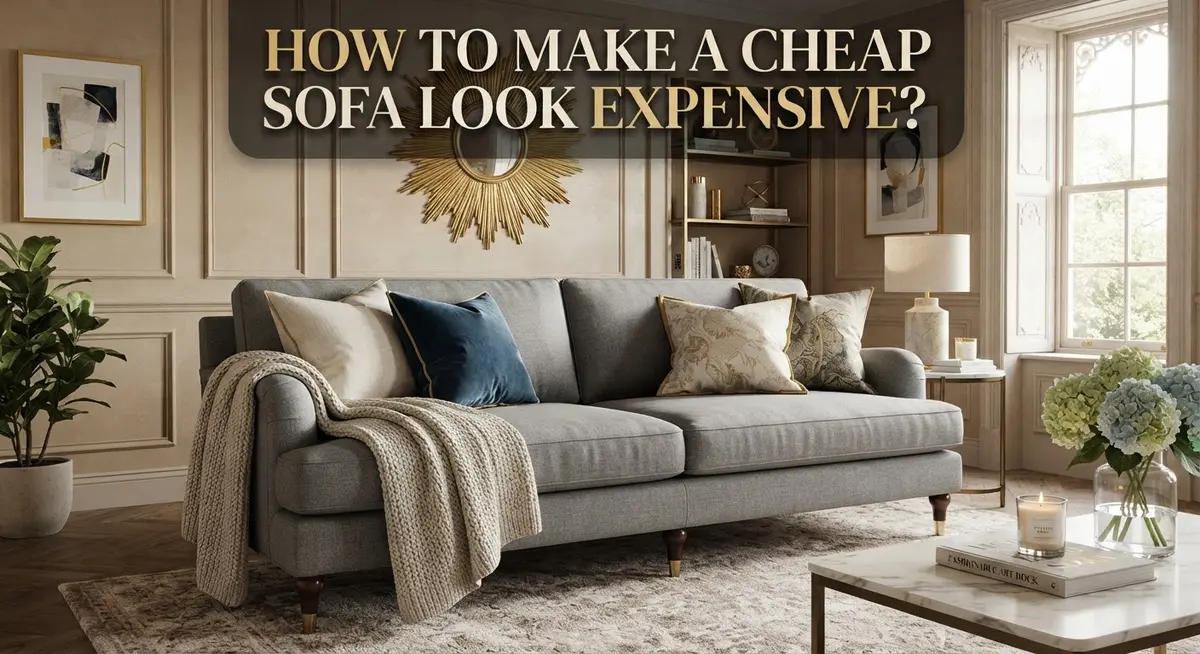
How to Make a Cheap Sofa Look Expensive?
Your sofa does not need a big budget to look expensive. Sometimes, all it takes is a few small changes to transform its entire vibe.
A cheap sofa often gives itself away through small details. Sagging cushions, flimsy legs, or a dull fabric finish can make it look less than luxurious.
The good news? You can fix most of these signals without buying new furniture. Simple styling tricks and small upgrades can completely change how your sofa feels in a room.
In this guide, we will show you how to give your sofa a high end makeover. You will learn how to fix structural issues, layer textures the right way, and style your space to highlight your sofa’s best features.
We will also cover common mistakes that make furniture look cheap, so you can avoid them.
By the end, you will know exactly how to make your sofa look like it belongs in a designer showroom. Every tip here is practical, affordable, and easy to apply today.
Let’s turn that budget sofa into the centerpiece your living room deserves.
In a Nutshell
Here is a quick summary to help you transform your sofa fast.
-
Fix the structure first. Repair sagging cushions and damaged fabric. This removes the biggest “cheap” signals right away.
-
Upgrade the legs. New legs lift your sofa and instantly make it look more custom. This is one of the easiest changes you can make.
-
Layer textures and pillows. Mix fabrics like velvet, boucle, and linen for a rich look. Contrast in texture creates visual depth.
-
Reposition your sofa. Pull it away from the wall. This simple move makes your space feel more intentional and designed.
-
Add design details. Look for tufting, piping, or tassels. These small touches add a polished finishing touch.
-
Style the space around it. Keep colors muted and curated. Avoid clutter, and skip high-sheen upholstery for a more sophisticated finish.
Small changes make a big difference. Focus on structure, texture, and placement. Your sofa will look far more expensive than it actually is.
Why Some Sofas Look Cheap (and Others Don’t)
Cheap sofas often signal their price tag through specific visual cues. Understanding these signals helps you target fixes that matter most.
Worn cushions are the biggest giveaway. When cushions sag or show wrinkles, your sofa instantly looks tired and low quality. This happens because budget furniture uses thinner foam and lower grade materials inside. The exterior may look fine, but the interior tells the real story.
Thin or shiny fabric screams budget. High shine upholstery reflects light in a way that reads as plastic or synthetic. Expensive sofas use matte finishes on quality textiles. The fabric also feels different. Cheap sofas use thin weaves that wear quickly and look flimsy.
Flimsy legs are another dead giveaway. Budget sofas often sit on short, thin wooden legs or plastic feet. These make the whole piece look like it’s about to collapse. Expensive sofas have substantial legs that lift the frame higher off the ground.
Poor proportions matter too. A sofa shoved against the wall looks like it’s hiding something. It lacks intentional placement. Luxury furniture is positioned to show off its shape and scale.
Visible damage compounds the problem. Loose seams, fraying edges, and stains make even decent sofas look neglected. These repairs are often cheap and easy to fix, but they make the biggest visual impact.
Cluttered styling around the sofa drags down its appearance. Too many pillows, blankets, or accessories create chaos instead of curated elegance.
The good news? Most of these issues have affordable solutions. You don’t need to replace your sofa. You need to address the specific details that make it look cheap. Focus on structure, fabric quality, and intentional styling. These changes transform perception without breaking your budget.
Fixing Structural Issues That Signal ‘Cheap’
Structural problems are the first thing people notice on a cheap sofa. A sagging cushion or torn fabric immediately signals low quality, even if the frame is solid underneath. The good news is that fixing these issues doesn’t require replacing your entire sofa.
Start by examining your cushions closely. If they sag in the middle, you can add support underneath. Plywood boards or high density foam placed beneath the cushions restore their shape and firmness. This simple fix transforms how your sofa looks and feels.
Next, check the fabric for any damage. Small tears, stains, or worn spots draw the eye immediately. You can repair minor tears with fabric glue or matching thread. For larger damage, consider having a professional patch the area or reupholster the affected section.
Legs deserve special attention. Cheap sofas often have thin, flimsy legs that wobble or look poorly proportioned. Upgrading to sturdier, taller legs instantly lifts your sofa and creates a more custom appearance. This single change can completely transform how expensive your sofa looks.
Inspect the frame for any visible damage or poor construction. Wobbly arms or uneven seating surfaces signal cheap manufacturing. Tighten any loose bolts or joints to ensure stability.
Pay attention to the piping and seams as well. Loose stitching or fraying edges need repair. Reinforcing these details prevents further deterioration and maintains a polished appearance.
Finally, address any odors or stains that linger. A thorough cleaning removes years of wear and refreshes the overall look. Professional cleaning services can handle deep stains without damaging delicate fabrics.
Once structural issues are resolved, your sofa becomes a solid foundation for styling upgrades. You are essentially removing all the visual cues that scream “budget furniture.”
Upgrading Legs and Base for a Lifted, Custom Look
Your sofa’s legs are one of the first things people notice. Upgrading them instantly lifts the entire piece and removes that “budget furniture” appearance. Cheap sofas often have thin, plastic, or flimsy legs that sit too low. Better legs change everything.
Start by measuring your current leg height and style. Take photos from multiple angles. This helps you understand what your sofa needs. Look for legs that are taller, sturdier, and more intentional in design. Wood legs with a natural finish or stained color feel more luxurious than plastic.
The installation process is straightforward for most sofas. Flip your sofa on its back or side. Unscrew the existing legs from the frame. Most attach with simple bolts or screws. Install new legs by reversing this process. If your sofa has a stapled base, you may need to cut staples and reattach them after installing new legs.
Taller legs create visual space underneath your sofa. This makes the entire piece look lighter and more intentional. Your sofa appears custom rather than mass produced. The lifted appearance also makes your living room feel more spacious overall.
Consider leg materials carefully. Wooden legs feel premium and warm. Metal legs offer a modern edge. Some people prefer legs with felt pads to protect flooring. Angled legs add sophistication compared to straight ones.
This single upgrade transforms how your sofa reads in the room. Combined with better cushions and new fabric, upgraded legs complete the custom look. Your budget sofa now has the foundation of something far more expensive.
Layering Textures, Fabrics, and Throw Pillows
Layering textures and fabrics transforms a basic sofa into something that feels curated and expensive. Start by selecting throw pillows in different materials. Mix velvet with linen, boucle with silk, or cotton with leather for visual depth.
Choose a color palette first. Pick two or three main colors, then add pillows in those shades using different fabrics. This creates harmony while the texture variation adds sophistication. Avoid random colors that clash and cheapen the look.
Vary your pillow sizes and shapes. Combine large square pillows with smaller rectangular ones and round accent pillows. Different proportions make styling feel intentional rather than generic. Arrange them asymmetrically for a relaxed, designer aesthetic.
Add a high quality throw blanket draped over the arm or back. Fold it loosely rather than perfectly. This casual elegance signals that someone lives there intentionally, not haphazardly.
Mix matte and textured finishes together. Avoid shiny or plastic looking fabrics that immediately signal budget quality. Instead, choose materials with subtle sheen or natural texture. Boucle, linen blends, and wool create visual interest without looking cheap.
Layer your fabrics in unexpected ways. Place a smooth velvet pillow next to a chunky knit texture. Contrast draws the eye and makes the arrangement feel thoughtfully designed.
Pay attention to fabric weight too. Heavier fabrics like velvet and wool read as more luxurious than thin, flimsy materials. They also drape and hold their shape better over time.
The key is strategic layering that shows intentional curation. Each pillow and blanket should serve a purpose in your overall design. This approach makes even an inexpensive sofa look like a carefully selected investment piece.
Adding Design Details Like Tufting, Piping, and Tassels
Design details transform a basic sofa into something that feels intentional and high end. These small touches signal quality to anyone who walks into your room.
Tufting is one of the most effective details you can add. This involves creating indented buttons or diamond patterns across cushions or the backrest. Tufting adds depth and visual interest instantly. It also makes a sofa appear more structured and refined. You can add tufting to existing cushions or have it professionally installed on your upholstery.
Piping refers to the decorative trim along seams and edges. It creates clean lines that look intentional and polished. Piping in a contrasting color adds sophistication without overwhelming your space. You can find piping in various textures and materials. Adding piping to throw pillows is easier than reupholstering the entire sofa. This detail alone elevates the perceived quality significantly.
Tassels bring texture and movement to your sofa. They work beautifully on pillow corners, blanket edges, or along the sofa base. Tassels add a playful yet luxurious feel. They catch light and draw the eye to specific details. Mixing tassel styles and sizes creates visual richness.
The key is choosing details that match your overall aesthetic. A modern sofa needs different details than a traditional one. Start small with one detail and see how it transforms your space. These additions cost far less than buying a new sofa. They make your current piece feel custom and curated. Even budget sofas look expensive when styled with these thoughtful touches. The details show you care about your space’s appearance.
Positioning and Styling the Sofa Within a Room
The way you position your sofa in a room dramatically changes how expensive it looks. Most people push their sofa against the wall, which actually makes it appear cheaper and smaller. Pull your sofa forward into the room instead. This creates intentional spacing that signals thoughtful design.
Floating your sofa away from the wall opens up your entire space. It shows confidence in your room’s layout and makes the furniture feel like a deliberate design choice rather than a default placement. Leave at least 12 to 18 inches between the sofa back and the wall for best results.
Consider the sofa’s angle within your room too. Angling your sofa slightly creates visual interest and breaks up rigid, predictable furniture arrangements. This positioning technique makes even modest sofas feel like statement pieces in carefully planned interiors.
The surrounding furniture matters equally. Place a console table or side table near your sofa to create a cohesive vignette. This layering of pieces suggests intentional styling rather than random furniture placement. Add a floor lamp beside the sofa to frame it with warm lighting.
Your wall behind the sofa deserves attention as well. A solid paint color, wallpaper, or gallery wall creates a backdrop that elevates your sofa’s importance. The sofa becomes the focal point rather than just another piece filling empty space.
Balance empty space with accessories strategically. Too many items look cluttered and cheap. Too few items make the arrangement feel incomplete. Aim for purposeful spacing where each element serves a visual function. This approach transforms your sofa’s positioning from accidental to intentional, instantly raising its perceived value.
Common Styling Mistakes That Cheapen a Sofa’s Look
Cheap sofas often look exactly that way because of specific styling choices that signal low quality. Understanding these mistakes helps you avoid them entirely.
High-shine upholstery reads as cheap instantly. Glossy fabrics reflect light harshly and feel plastic-like to the touch. Choose matte or subtly textured finishes instead. They absorb light naturally and feel more refined.
Sagging or visibly worn cushions destroy your sofa’s appearance immediately. Flat, compressed cushions signal age and poor construction. If your cushions sag, add firm inserts underneath or replace the filling entirely. This single fix makes a massive difference in how your sofa reads.
Cluttered styling overwhelms a space and makes everything look cheaper. Too many pillows piled haphazardly or random accessories scattered everywhere create visual chaos. Curate your accessories thoughtfully. Choose fewer pieces that work together intentionally.
Pushing your sofa flush against the wall makes it look like a budget piece. This placement feels cramped and accidental. Floating your sofa away from the wall creates intentional spacing that feels more expensive and sophisticated.
Wrong room proportions hurt your sofa’s appearance too. An oversized sofa in a tiny room or a small sofa in a massive space looks awkward and cheap. Measure your space carefully before styling. Your sofa should fit the room’s scale appropriately.
Poor color coordination cheapens everything around your sofa. Mismatched throw pillows or blankets that clash with your palette look haphazard. Stick to a cohesive color scheme. Use complementary tones that work together harmoniously.
Finally, ignoring the wall behind your sofa wastes valuable styling real estate. A bare wall emphasizes your sofa’s shortcomings. Add artwork, a mirror, or wallpaper to create visual interest and draw attention upward. These changes transform how your entire sofa reads in the room.
Troubleshooting Persistent ‘Cheap’ Signals
Persistent cheap signals often hide in details you can fix without replacing your sofa. Start by examining the legs. Worn, flimsy, or plastic legs scream budget furniture. Upgrading to sturdy wooden or metal legs instantly lifts the entire piece and changes how it sits in your room.
Next, inspect the cushions closely. Sagging, flattened, or visibly compressed cushions are the biggest giveaway of a low quality sofa. You can address this by adding supportive inserts underneath or having cushions professionally refilled. This single fix transforms how your sofa looks and feels.
Check the seams and edges for damage. Loose threads, fraying fabric, or separation at the corners signal poor construction. Carefully repair these areas or have them professionally finished. Small fixes create a polished, intentional appearance.
Worn fabric patches are another dead giveaway. If your sofa has visible stains, pilling, or faded spots, consider a fabric refresh. You can use upholstery cleaner for surface issues or explore reupholstering specific sections if damage is concentrated.
The frame itself matters too. Sofas with visible wobbling or creaking indicate structural problems. Tighten any loose bolts or joints underneath. A solid, stable sofa automatically feels more expensive than one that shifts when you sit.
Pay attention to the overall silhouette. A sofa that lists to one side or has uneven cushion heights looks cheap immediately. Rearrange or replace cushion inserts to create an even, balanced appearance.
These troubleshooting steps address the core issues that make sofas look budget friendly. Fix structural problems first, then layer in styling elements. This foundation ensures your sofa reads as intentional and quality rather than cheap and temporary.
Final Thoughts
Making a cheap sofa look expensive comes down to small, smart choices. You don’t need a big budget to get a big impact.
Focus on the details first. Fix legs, cushions, and fabric issues before adding any styling touches. These fixes solve most of the problem on their own.
Then layer in texture. Mixing fabrics like velvet, linen, and boucle adds depth that instantly feels more luxurious.
Throw pillows and blankets should feel curated, not random. Pick a few pieces with intention instead of piling on too many.
Where you place your sofa matters just as much as how it looks. Pull it away from the wall and give it room to breathe. This one change transforms how a space feels.
Keep your color palette calm and cohesive. Bold clashing colors read as busy and cheap. Muted tones feel expensive and timeless.
Remember that styling around the sofa counts too. A well placed rug, a clean wall, and matching furniture pieces all support the look you’re building.
Small design details make a real difference. Tufting, piping, and tassels add craftsmanship cues that shoppers associate with higher end furniture.
Don’t rush this process. Take time to step back and look at your sofa as a whole. Notice what still feels off and adjust from there.
Most cheap looking sofas aren’t actually poor quality. They just need better care and smarter styling.
With a few thoughtful changes, your sofa can look like a designer piece. You’ll spend little money but gain a lot of visual value.
The goal is simple: create a space that feels intentional, balanced, and well loved. That’s what expensive furniture really looks like.
Frequently Asked Questions
How do I know if my sofa’s bones are good enough to upgrade?
Check the frame for solid wood construction. Push down on different areas of the sofa. A quality frame won’t creak or wobble. Look underneath if possible. You want to see hardwood, not particleboard or cheap plywood.
Feel the cushions next. Good bones mean the cushioning compresses and bounces back. If cushions stay flattened or feel lumpy, the filling may be poor quality. The frame matters more than the fabric. A sturdy frame with worn fabric is worth upgrading. A weak frame that’s already sagging? That’s trickier to fix.
What textures make a sofa look more expensive?
Velvet, linen, and boucle read as luxury instantly. These fabrics catch light beautifully and feel substantial. Avoid high-shine polyester or plastic-feeling materials.
Layer different textures together. Pair a smooth linen sofa with a chunky knit throw. Add silk or cotton pillows in varying weaves. This mix signals intentional design choices, not budget shopping.
Can new sofa legs really make a difference?
Yes. Legs are surprisingly powerful. Cheap sofas often sit low with stumpy legs. Upgraded legs lift the sofa higher off the ground. This instantly makes it look more refined and intentional.
Metal, wooden, or angled legs all work well. The key is choosing legs that match your room’s style. This small swap transforms how your entire sofa reads in the space.
Should I add throw pillows if my sofa looks cheap?
Absolutely, but do it strategically. Three to five pillows work better than eight piled randomly. Choose pillows in your room’s color palette. Mix textures like velvet with linen.
Avoid busy patterns everywhere. One patterned pillow with solid textures around it looks curated. Random patterns scattered across the sofa look chaotic and cheap.

Phil is the founder and creative mind behind Aesthetic Space Finds, a home decor enthusiast dedicated to helping people transform their living spaces through honest product reviews, in-depth comparisons, and expert buying guides. With a keen eye for design and a passion for discovering hidden gems in the world of home accessories, Phil curates content that makes stylish, functional living accessible to everyone.


