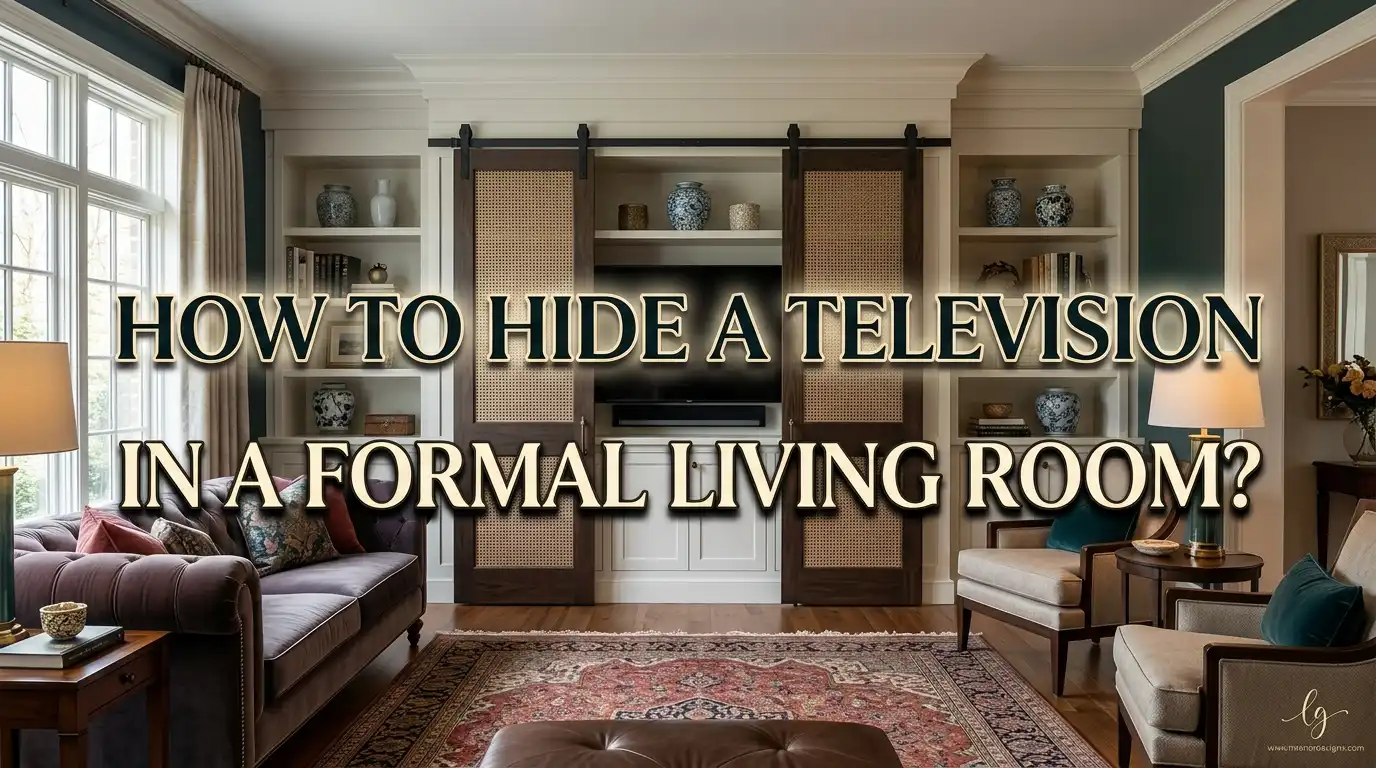
How to Hide a Television in a Formal Living Room?
A formal living room should feel polished, elegant, and intentional. Every piece of furniture, artwork, and decorative object serves a purpose. Then there it is: a big black rectangle mounted on the wall or perched on a console, pulling focus from everything else in the room.
Televisions and formal living rooms have always been an awkward pairing. You want the comfort of watching a great film or catching the evening news, but you also want the room to look put together for guests. The good news is that you do not have to choose one or the other.
Dozens of creative, practical, and surprisingly affordable methods exist to keep your TV out of sight or make it blend so well that visitors never notice it. Interior designers have been solving this exact problem for decades, and their best ideas are now more accessible than ever.
Whether you prefer a DIY approach, a high tech solution, or something in between, this guide will walk you through every option. By the end, you will know exactly which method fits your space, your style, and your budget.
In a Nutshell
Built in cabinetry and sliding panel doors remain two of the most popular ways to conceal a television in a formal setting because they blend into the architecture of the room.
Frame TVs and art mode screens let the television double as a piece of artwork, which reduces visual disruption without requiring any moving parts.
Motorized TV lifts hidden inside furniture offer a dramatic reveal and keep the screen completely out of sight when not in use.
Mirror TV technology turns the screen into a decorative mirror when powered off, making it ideal for rooms with mantels or accent walls.
Gallery walls and dark accent walls are two of the most budget friendly strategies because they camouflage the television using color, art, and arrangement rather than costly hardware.
A projector and retractable screen setup removes the permanent black rectangle entirely and works well in rooms with controlled lighting. Each method has different cost, installation, and design implications, so the best choice depends on the size of your television, the layout of your room, and how often you actually watch TV in that space.
Why a Television Feels Out of Place in a Formal Living Room
Formal living rooms are built around balance, symmetry, and curated design. Crown molding, fine upholstery, and carefully chosen artwork all contribute to a refined atmosphere. A television disrupts that balance because it introduces a large, dark, reflective surface that was never part of the original design language.
The black screen creates what designers call a “visual black hole.” When the TV is off, it absorbs light and draws the eye away from everything else. This effect becomes more noticeable in rooms with lighter color palettes, traditional furniture, and carefully arranged focal points like fireplaces or statement art.
The issue is not about being anti technology. It is about maintaining the mood and purpose of the room. A formal living room often serves as a space for conversation, hosting, and relaxation. A visible television can shift the room’s energy from social to passive. Hiding or disguising the TV restores the room’s intended atmosphere while still giving you full access to entertainment.
Hide the TV Inside a Custom Built In Cabinet
Built in cabinetry is one of the most effective ways to conceal a television in a formal setting. The cabinet becomes part of the room’s architecture, blending with the walls, molding, and trim. When the doors close, the TV disappears completely.
Bi fold doors, pocket doors, and hinged panels are the most common configurations. Bi fold doors stack neatly to the sides and require less clearance than a full swing door. Hinged doors work well for smaller televisions and can feature decorative panels or mirrors on their exterior face. Choose door hardware that matches other metals in the room, such as lamp finishes or fireplace accessories, for a cohesive look.
Pros: The TV is fully hidden. The cabinet adds storage for media devices, remotes, and cables. Built ins increase a home’s resale value and complement traditional architecture.
Cons: Custom cabinetry is expensive, often ranging from a few thousand dollars to over ten thousand depending on materials and complexity. Installation requires professional help and can take weeks. The cabinet depth must accommodate the TV, which can reduce usable wall space.
Use Sliding Panels or Barn Doors Over the Screen
Sliding panels offer a middle ground between full cabinetry and open wall mounting. A track mounted above the television allows one or two panels to glide across the screen. When closed, the panels become a design feature. When open, they tuck to the sides.
This approach works especially well above fireplaces, where built in cabinets may look too bulky. You can cover the panels in wallpaper, fabric, or wood veneer to match the surrounding decor. Some homeowners commission artists to paint directly on the panels, turning the TV cover into original artwork.
For a formal living room, choose refined panel materials. Grasscloth, linen, or dark stained wood panels suit traditional interiors. Avoid rustic barn door hardware unless it matches the room’s style. Instead, opt for concealed tracks or slim, polished metal rails that stay invisible.
Pros: Panels add texture and visual interest to the wall. They are less expensive than full cabinetry and easier to install. The TV remains easy to access.
Cons: The panels need wall space to slide into when open. If the wall is narrow, the panels may block artwork or shelving on either side. Hardware quality matters because cheap tracks can stick or become noisy over time.
Disguise the TV as a Piece of Art with a Frame TV
Frame TVs and art mode screens have changed the game for formal living rooms. These televisions display high resolution artwork, photographs, or custom images when not actively streaming content. The screen uses a matte, anti glare finish that mimics the look of a real canvas or print.
The key to making a frame TV convincing is the bezel. Magnetic or snap on bezels come in various finishes like walnut, teak, white, and black. Select a bezel that matches the other frames in the room. If you have gold leaf frames on your artwork, a warm wood or gilt style bezel helps the TV blend in.
You can go further by placing the frame TV within a gallery wall arrangement. Surround it with similarly sized framed prints, and the television becomes one element among many. Interior designer Natalie Myer of Veneer Designs has noted that guests often cannot tell the difference between the frame TV and the real art pieces around it.
Pros: No moving parts or doors needed. The TV stays on the wall and looks good at all times. Art mode uses low energy and can cycle through thousands of images.
Cons: The screen still looks slightly different from real artwork at close range. Frame TVs cost more than standard televisions of the same size. You need a stable internet connection for the art library feature to work smoothly.
Install a Motorized TV Lift Inside Furniture
A motorized lift hides the television inside a piece of furniture. Press a button, and the screen rises smoothly into view. Press it again, and it disappears back into the cabinet. This creates a clean, almost theatrical effect that suits formal rooms perfectly.
Common placements include the foot of a sofa, inside a console table, or within a custom credenza positioned along the wall. The furniture piece looks completely normal when the TV is stored. Some high end versions integrate the lift into a fireplace mantel or a low bookcase.
The lift mechanism requires enough interior depth and height to accommodate the television in its lowered position. Measure your TV carefully before selecting or building the furniture piece. Most lifts support screens between 32 and 65 inches, though larger options exist for bigger televisions.
Pros: The TV is entirely invisible when not in use. Motorized lifts add a “wow factor” that impresses guests. The furniture piece provides additional storage space.
Cons: Motorized lifts are expensive, especially for larger screens. Installation requires professional help in most cases. If the motor fails, repair can be costly and disruptive. The furniture must stay in a fixed position near a power outlet.
Conceal the TV Behind a Mirror
Mirror TV technology places a semi transparent mirror over the television screen. When the TV is off, the surface looks and functions like a regular mirror. Turn the TV on, and the image projects clearly through the glass. This solution is elegant, space efficient, and perfect for formal rooms.
Mirror TVs work especially well above fireplaces where a decorative mirror would naturally hang. You can frame the mirror to match the mantel style, whether that is ornate gold, sleek black, or antique silver. The result is a piece that looks like it has always been part of the room.
The mirror also reflects light, which can make smaller formal living rooms feel brighter and more open. This dual function adds practical value beyond just hiding the screen.
Pros: The TV disappears completely when off. The mirror adds light and the illusion of more space. Frame options are extensive and suit traditional decor.
Cons: Mirror TVs cost significantly more than standard televisions. The image can appear slightly dimmer than a regular TV because the light passes through the mirror layer. Professional calibration may be needed to get the best picture quality.
Paint the Wall a Dark Color to Camouflage the Screen
This is one of the simplest and most affordable strategies. Mount the television on a wall painted in a deep, dark shade such as charcoal, navy, or matte black. The dark background reduces the contrast between the wall and the screen, making the TV far less noticeable when turned off.
Interior designer Emily Del Bello used this exact technique in a living room project by painting a shadowy accent wall black and mounting the TV there. At first glance, many visitors do not even notice the television. The dark wall also creates a dramatic backdrop for lighter furniture and metallic accents, adding depth to the room.
You can enhance this effect by choosing a wall treatment with texture. Dark wood paneling, limewash, or Venetian plaster give the wall dimension and visual interest that further distracts from the flat screen.
Pros: Very affordable. No construction or special hardware needed. The dark wall becomes a stylish design element. Easy to undo if you change your mind.
Cons: The TV is still visible up close. Dark walls can make a room feel smaller if not balanced with lighter elements. This method works best as camouflage, not full concealment.
Build a Gallery Wall Around the Television
A gallery wall surrounds the television with framed artwork, photographs, and decorative objects. The eye naturally scans the entire arrangement rather than landing on the TV alone. The screen becomes one frame among many, reducing its visual weight.
To make this work, choose frames that are similar in color or thickness to the TV’s bezel. Black frames are the most common match. Mix frame sizes and orientations to create a dynamic, collected look. Include some frames that are close in size to the TV itself so the screen does not stand out as the largest element.
This strategy pairs perfectly with a frame TV that displays art when idle. The combination of real artwork and a digital display creates a wall that looks intentionally curated. You can also add small shelf ledges, sconces, or decorative objects to break up the grid and add dimension.
Pros: Budget friendly and highly customizable. No construction required. The gallery wall adds personality and character to the room. Easy to rearrange or update over time.
Cons: The TV is still visible. A poorly planned arrangement can look cluttered rather than curated. You need enough wall space to surround the TV with sufficient artwork.
Replace the TV with a Projector and Retractable Screen
For the ultimate disappearing act, remove the permanent screen entirely. A projector mounted on the ceiling or placed on a high shelf casts an image onto a motorized retractable screen. When movie night ends, the screen rolls up into a slim housing that is nearly invisible against the ceiling.
Short throw projectors are ideal for formal living rooms because they sit close to the wall and produce a large image without needing a long throw distance. Some models can project an image of 100 inches or more from just a few feet away.
The retractable screen can be hidden inside a ceiling recess, a decorative soffit, or even inside a piece of furniture. Designer Emily Henderson adopted this approach in her own living room and found the small ceiling mounted projector to be far less intrusive than a wall mounted TV.
Pros: No visible screen on the wall at all. Projectors offer very large image sizes. The room looks completely free of technology when the system is stored.
Cons: Image quality depends heavily on ambient light control. Formal living rooms with large windows may need blackout curtains. Projector bulbs or laser sources have a limited lifespan and need replacement. The setup costs more than a standard TV when you factor in the projector, screen, and installation.
Hide the TV Behind Artwork on a Hinge or Track
A single piece of artwork can serve as a direct cover for the television. The painting or framed print hangs in front of the screen and moves aside when you are ready to watch. This keeps the room’s focal point on art rather than electronics.
Three common mechanisms make this work. A piano hinge lets the artwork swing open like a cabinet door. A horizontal track allows the frame to slide to one side. A manual lift off approach uses a lightweight canvas that you simply remove and set aside.
For formal living rooms, commission a painting or select a framed print that matches the room’s color palette and style. The artwork should look intentional and beautiful on its own, not like a cover up. Many homeowners work with artists to create custom pieces that fit the exact dimensions of the TV.
Pros: The wall looks like a curated art display when the TV is covered. The mechanism can be as simple or as sophisticated as you want. Artwork on a hinge or track is less expensive than full cabinetry.
Cons: The artwork must be lightweight enough to move easily. Hinged pieces swing into the room and need clearance space. Sliding tracks require adjacent wall space. The mechanism may be visible at close range.
Use Fabric, Curtains, or a Decorative Textile
Fabric is one of the most flexible and renter friendly ways to hide a television. A curtain rod or ceiling mounted track allows you to hang a decorative textile directly in front of the screen. Pull the fabric aside to watch, then draw it closed when finished.
Tapestries, woven textiles, and embroidered panels add warmth and texture to a formal living room while concealing the TV. Choose a fabric that coordinates with the window treatments, upholstery, or accent pillows in the room. A matching textile makes the TV cover look like a deliberate design choice rather than an afterthought.
For a more structured look, mount the fabric inside a decorative frame that hangs over the TV on hooks or a simple rail system. This creates the appearance of a framed textile art piece.
Pros: Very affordable. Easy to install and remove. Causes minimal wall damage. Fabric options are nearly unlimited in color, pattern, and texture.
Cons: Fabric does not provide the polished, built in look of cabinetry. The textile may sag or wrinkle over time. Dust and pet hair can collect on the fabric surface. This approach suits casual formal rooms better than very traditional ones.
Integrate the TV Into Existing Millwork and Shelving
If your formal living room already has built in bookshelves, a fireplace surround with cabinetry, or an entertainment wall, you can integrate the television directly into that existing structure. The TV becomes one element within a larger architectural feature rather than a standalone object demanding attention.
Interior designer Gillian Segal used this approach by concealing a TV behind a simple millwork door system that folds open and closed. The mechanism matched the surrounding wall so closely that it looked like part of the original architecture. This allowed the other design elements in the room to remain the focal point.
Recessing the TV into the wall within the shelving unit creates an even more seamless effect. Surround the recessed screen with books, decorative objects, and framed photos. When the TV is off, it reads as a dark panel within a richly styled wall unit.
Pros: Uses existing structures, which can reduce costs. The TV blends into the room’s architecture. Surrounding shelves provide space for styling and storage.
Cons: Retrofitting existing millwork requires precision and may need a carpenter. The TV size is limited by the available niche or shelf space. Adding doors or panels to existing shelves changes their original look.
Store the TV Inside an Armoire or Antique Cabinet
Before flat screens existed, armoires were the go to solution for hiding televisions. That strategy still works beautifully in formal living rooms, especially when you select a piece with character and craftsmanship.
A French provincial armoire, a Swedish secretary, or an English oak wardrobe can hold a flat screen television behind closed doors. Place the TV on an interior shelf or mount it to the back panel. Store streaming devices, cables, and remotes on the lower shelves.
This approach adds a stunning furniture piece to the room while solving the TV problem. The armoire becomes a focal point on its own terms, drawing the eye with its wood grain, hardware, and proportions rather than a glowing screen.
Pros: Antique and vintage furniture adds character and warmth. No construction or wall modification needed. The TV is fully concealed. The cabinet provides additional storage for blankets, games, or books.
Cons: Armoires are large and heavy, which limits placement options. The interior depth may not fit modern ultra thin mounting brackets. Ventilation can be a concern if the cabinet lacks airflow. Antique pieces may need modification to accommodate cables and power strips.
Choose a Pop Up TV That Rises from a Console
Pop up TVs add drama and surprise to a formal living room. The screen sits hidden inside a low console, sideboard, or custom built unit. A motorized mechanism raises the TV into viewing position and lowers it back when you finish watching.
This works especially well along a wall behind a sofa or within a room divider that separates the living area from a dining space. The console can be styled with vases, books, and decorative objects on top. When the TV is lowered, nobody would guess that a screen lives inside the furniture.
Interior designer Mark Cunningham used a version of this approach by building a hidden TV into a back wall shelf that pops up for movie nights. The room functions as both a formal entertaining space and a relaxed family hangout, depending on whether the TV is raised or lowered.
Pros: Total concealment when not in use. The furniture surface remains functional. The pop up effect is impressive and fun.
Cons: Requires a reliable motorized mechanism and nearby power source. The console must be deep and tall enough to house the TV internally. Repair access can be difficult if the motor fails. Cost is higher than passive concealment methods.
Manage Cables and Devices for a Clean Look
No matter which concealment method you choose, visible cables and devices can ruin the effect. A hidden TV with dangling wires is only half hidden. Cable management deserves the same attention as the concealment strategy itself.
Run cables through the wall using an in wall cable management kit. These kits include two wall plates: one behind the TV and one near the floor outlet. The cables pass through the wall cavity between the two plates, keeping them completely out of sight. If you cannot run cables through the wall, use paintable cable covers that blend with the wall color.
Place streaming devices, cable boxes, and gaming consoles inside closed cabinets or in a separate media closet. Many devices now work with IR repeaters or RF remote systems, so you can control them even when they are tucked away in another room or behind a closed door.
Pros: A clean cable setup enhances every concealment method. In wall kits are inexpensive and widely available. Remote media closets keep heat and clutter out of the living room.
Cons: In wall cable routing may require cutting drywall and basic electrical knowledge. Older homes with plaster walls make this process harder. Professional installation adds cost.
Plan Your Budget and Choose the Right Method for Your Room
The right concealment strategy depends on three factors: your budget, your room’s architecture, and how often you watch TV in that space. A room used primarily for entertaining may justify a bigger investment in full concealment. A room where the family watches TV every evening might benefit more from a frame TV or gallery wall approach that keeps the screen accessible.
Budget friendly options include dark accent walls, gallery walls, and fabric covers. These methods cost under a few hundred dollars and require minimal skill to execute. Mid range options include sliding panels, hinged artwork, and frame TVs. These typically run between a few hundred and a couple thousand dollars.
High end solutions include custom built in cabinetry, motorized lifts, and mirror TV installations. These can cost several thousand dollars or more but deliver the most seamless results. Always factor in the cost of professional installation, cable management, and any necessary electrical work.
Take time to measure your TV, assess your wall space, and decide how visible you want the mechanism to be. Sketch out the wall with and without the TV visible. This simple exercise helps you visualize the final result before committing to a method.
Frequently Asked Questions
What is the cheapest way to hide a TV in a formal living room?
Painting the wall behind the TV a dark color is the most affordable option. Charcoal, navy, and matte black paints cost very little and dramatically reduce the visual contrast between the wall and the screen. A gallery wall using frames you already own is another low cost strategy. Fabric covers hung from a simple curtain rod also fall into the budget friendly category. All three methods can be completed in a single weekend without professional help.
Can I hide a large 65 inch or 75 inch TV in a formal room?
Yes, but the method matters. Built in cabinetry, sliding panels, and motorized lifts can accommodate screens up to 75 inches or larger with proper planning. Frame TVs are available in sizes up to 85 inches and work well in gallery wall arrangements. Mirror TVs also come in large formats. The key is to scale the surrounding design elements to match the TV size. A large screen surrounded by tiny frames will still look out of place.
Does hiding a TV affect ventilation and heat management?
It can if you do not plan for airflow. Televisions generate heat during use, and an enclosed space without ventilation can shorten the TV’s lifespan. Built in cabinets and armoires should include open backs, ventilation holes, or small fans to allow air circulation. Motorized lift cabinets typically have built in ventilation because the TV is stored in an enclosed compartment. Always check the TV manufacturer’s guidelines for minimum clearance around the screen.
Is a frame TV convincing enough for a formal living room?
Frame TVs are highly convincing from a normal viewing distance. The matte finish and anti glare coating mimic the appearance of a canvas print. Up close, an observant person might notice the slight difference in texture or the faint glow of the screen. Adding a custom bezel that matches other frames in the room significantly improves the illusion. Many interior designers consider frame TVs one of the best solutions for formal spaces.
How do I hide TV cables in a formal living room?
In wall cable management kits are the cleanest solution. These kits route cables through the wall cavity between two mounting plates, keeping wires completely invisible. Paintable cord covers are a good alternative for renters or for walls that are difficult to cut into. You can also place all media devices in a separate media closet or inside a closed cabinet and use wireless HDMI transmitters or IR repeaters to maintain remote control functionality.
Can I use a projector instead of a TV in a formal living room?
A projector is an excellent option if you can control ambient light in the room. Motorized retractable screens disappear into the ceiling when not in use, leaving no visible technology on the walls. Short throw projectors work well in smaller rooms. The main limitation is that projectors produce a dimmer image than televisions in bright rooms, so blackout curtains or shades may be necessary for daytime viewing. For evening use, a projector setup can look stunning and keep the room completely free of screens during the day.

Phil is the founder and creative mind behind Aesthetic Space Finds, a home decor enthusiast dedicated to helping people transform their living spaces through honest product reviews, in-depth comparisons, and expert buying guides. With a keen eye for design and a passion for discovering hidden gems in the world of home accessories, Phil curates content that makes stylish, functional living accessible to everyone.